
Free GCC Assessment with Experts

Remote Patient Monitoring Solutions
Remote patient monitoring is no longer limited to collecting vitals from connected devices. Healthcare organizations now require clinically intelligent RPM platforms that can predict patient deterioration, automate care coordination, integrate directly into EHR workflows, and support reimbursable care delivery models. Through its Healthcare Software Engineering Services and predictive AI/ML Services capabilities, Zymr engineers end-to-end remote patient monitoring platforms built for scalable virtual care delivery. Our solutions include AI-powered clinical alerts, FHIR-native EHR integration, wearable device pipelines, condition-specific RPM modules, CMS billing automation, and HIPAA-compliant infrastructure.



The remote patient monitoring market is expanding rapidly as CMS reimbursement incentives accelerate adoption and health systems push deeper into hospital-at-home and chronic care management programs. But most RPM platforms still behave like passive dashboards, streams of disconnected vitals data with little clinical context and minimal operational intelligence.
Healthcare organizations need more than device connectivity. They need systems that identify deterioration earlier, reduce readmissions, automate reimbursement workflows, and integrate directly into clinical operations instead of creating another isolated monitoring silo.
Zymr builds RPM platforms that transform continuous patient monitoring into actionable clinical infrastructure. Zymr engineers RPM systems connected directly into clinical decision support workflows. This helps with predictive analytics, real-time alerting, AI-driven deterioration scoring, FHIR-native interoperability, and billing automation that turn RPM into both a patient care engine and a sustainable financial model.
60+
Fintech and banking engineering engagements
40%
Faster delivery using ZOEY and ZAIQA accelerators
100%
PCI DSS and compliance-aligned engineering
10+
Payment and banking integrations
Why Custom RPM Software?
Off-the-shelf RPM solutions may simplify early deployment, but they often become limiting once healthcare organizations try to operationalize remote care at scale. Device compatibility gaps, rigid workflows, weak EHR interoperability, lack of AI-driven clinical intelligence, and limited billing automation create friction for both clinicians and operations teams. Organizations often address these challenges through robust IoT Medical Device Integration strategies that connect diverse medical devices into a unified monitoring ecosystem.
Hospitals need RPM systems that fit directly into existing care pathways rather than forcing clinicians into disconnected dashboards. Digital health companies need differentiated RPM products tailored to specific patient populations and chronic conditions.
At the same time, AI is fundamentally changing what remote monitoring can achieve. Continuous vitals collection alone has limited value if clinicians cannot identify risk early enough to intervene. Custom RPM software development gives healthcare organizations ownership over clinical workflows, device ecosystems, reimbursement logic, patient engagement models, and operational intelligence layers that packaged RPM platforms rarely support effectively.
RPM Development Needs
RPM Strategy & Architecture Consulting

Custom RPM Platform Development
RPM Device & Wearable Integration
AI-Powered Clinical Intelligence for RPM
RPM EHR Integration & FHIR Engineering
RPM Compliance, Testing & CMS Billing
RPM Engineering Capabilities
Device & Sensor Integration Layer
Data Pipeline & Real-Time Streaming Layer
AI-Powered Clinical Intelligence Layer
FHIR-Native Integration Layer
Condition-Specific RPM Modules
Patient & Clinician Experience Layer
CMS Billing & Revenue Layerx
Hospital-at-Home Platform Layer
Remote Patient Monitoring Software Development
AI-Powered Remote Cardiac Monitoring Platform
A digital health company needed a scalable RPM platform capable of continuously monitoring cardiac patients outside clinical environments while reducing alert fatigue for care teams. Zymr engineered a wearable ECG monitoring platform with real-time telemetry streaming, arrhythmia detection workflows, clinician escalation pathways, and FHIR-native EHR integration. The platform supported continuous monitoring across distributed patient populations while improving clinical visibility into cardiac risk events before acute escalation occurred.
Project Details →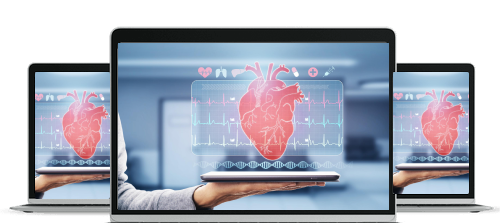
Hospital-at-Home Monitoring Infrastructure
A healthcare provider expanding its hospital-at-home program required a remote monitoring ecosystem capable of supporting acute-level care outside traditional inpatient settings. Zymr built a hospital-at-home RPM platform integrating pulse oximeters, blood pressure devices, temperature sensors, medication tracking workflows, and nurse escalation management into a centralized command-center experience. The system enabled continuous patient visibility while supporting operational coordination across distributed care teams.
Project Details →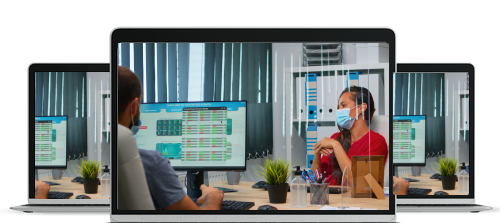
AI-Powered Chronic Disease RPM & CMS Billing Automation
A chronic care management organization needed to improve RPM reimbursement performance while reducing clinician administrative burden. Zymr engineered a condition-specific RPM platform with automated CPT 99453–99458 tracking, clinician time capture, AI-driven deterioration scoring, and reimbursement reporting workflows integrated directly into the monitoring platform. The result was an RPM system that improved both patient engagement visibility and operational reimbursement efficiency. Explore additional healthcare and digital health case studies across RPM, interoperability, AI diagnostics, and healthcare cloud modernization.
Project Details →
Who We Build RPM For
HealthTech Startups Building RPM Products
Digital health startups often need more than a monitoring dashboard. They need scalable clinical infrastructure, device interoperability, reimbursement workflows, and operational architectures capable of surviving payer scrutiny, health-system integration, and rapid growth. We help startups build RPM products designed for long-term clinical and commercial viability.
Hospitals & Health Systems
reducing readmissions and improving chronic disease outcomes. We engineer enterprise-grade RPM platforms aligned with clinical workflows, EHR ecosystems, reimbursement requirements, and operational governance standards.
Hospitals & Health Systems
Health systems increasingly use RPM to extend care delivery beyond hospital walls while reducing readmissions and improving chronic disease outcomes. We engineer enterprise-grade RPM platforms aligned with clinical workflows, EHR ecosystems, reimbursement requirements, and operational governance standards.
Home Health & Post-Acute Providers
Post-discharge monitoring and home-based care programs require continuous patient visibility without overwhelming care teams operationally. We build RPM systems supporting home-care coordination, deterioration monitoring, caregiver engagement, and reimbursement-aware remote care workflows.
Medical Device Companies
Connected medical device manufacturers increasingly need medical device software ecosystems surrounding their hardware products. We engineer companion RPM platforms, interoperability infrastructure, analytics systems, and cloud telemetry environments that transform devices into connected clinical products.
Telehealth Platforms
Virtual-care providers increasingly combine telehealth encounters with longitudinal patient monitoring. We integrate RPM capabilities directly into telehealth ecosystems including device pipelines, clinical alerts, symptom tracking, and continuous patient engagement workflows.
Clinical Research Organizations (CROs)
Virtual-care providers increasingly combine telehealth encounters with longitudinal patient monitoring. We integrate RPM capabilities directly into telehealth ecosystems including device pipelines, clinical alerts, symptom tracking, and continuous patient engagement workflows.
Health Insurance Payers
Payers are increasingly investing in RPM to improve chronic disease outcomes, reduce avoidable utilization, and support value-based care initiatives. We engineer monitoring ecosystems supporting member engagement, risk analytics, reimbursement workflows, and population-level care visibility.
Senior Living & Long-Term Care
Aging populations require continuous visibility into falls risk, chronic disease progression, medication adherence, and deterioration patterns. We build RPM systems optimized for senior-care environments with caregiver coordination, accessibility-aware experiences, and long-term monitoring workflows.
Clinical Research Organizations (CROs)
Clinical research increasingly relies on remote patient telemetry and decentralized trial infrastructure. We engineer RPM platforms supporting remote trial participation, continuous monitoring, digital biomarker collection, patient-reported outcomes, and regulated research workflows.
Clinical Research Organizations (CROs)
Clinical research increasingly relies on remote patient telemetry and decentralized trial infrastructure. We engineer RPM platforms supporting remote trial participation, continuous monitoring, digital biomarker collection, patient-reported outcomes, and regulated research workflows.
Why Zymr
AI-Powered Clinical Intelligence
FHIR-Native RPM Architecture
CMS Billing Automation
Condition-Specific RPM Modules
GCC RPM Engineering Squads
Solutions We Deliver
Custom RPM Platform Build
We engineer full-scale RPM platforms from the ground up including device integration infrastructure, patient applications, clinician command centers, analytics systems, reimbursement workflows, interoperability layers, and AI-driven monitoring capabilities designed as unified clinical ecosystems.
RPM Mobile App Development
Patient engagement is central to RPM success. We build mobile RPM applications for iOS, Android, React Native, and Flutter supporting telemetry synchronization, symptom reporting, medication reminders, secure messaging, onboarding workflows, and long-term engagement optimization.
Hospital-at-Home Technology Stack
Hospital-at-home programs require infrastructure capable of supporting acute-level monitoring outside inpatient environments. We engineer continuous telemetry systems, escalation orchestration, clinician operations tooling, caregiver coordination workflows, and reimbursement-aware remote acute-care ecosystems.
Legacy RPM Modernization
Many RPM environments struggle with fragmented device support, disconnected dashboards, poor interoperability, and limited scalability. We modernize legacy RPM systems into cloud-native, AI-ready, FHIR-native monitoring platforms capable of supporting next-generation virtual-care delivery.
AI-Powered Predictive RPM
Most monitoring systems detect deterioration after escalation begins. We engineer predictive RPM platforms capable of identifying sepsis risk, deterioration patterns, readmission probability, medication non-adherence, and chronic disease progression earlier through AI-driven continuous analysis. This is one of Zymr’s clearest differentiators. We engineer RPM systems that predict clinical risk, not just display vitals.
FHIR-Native RPM Platform
Disconnected monitoring systems create operational fatigue for clinicians and limit adoption across enterprise healthcare environments. We build FHIR-native RPM ecosystems connecting devices, patient telemetry, EHR workflows, CDS Hooks, SMART-on-FHIR dashboards, and longitudinal patient records into unified clinical operations.
RPM Revenue Engine
RPM reimbursement complexity often prevents programs from scaling sustainably. We engineer reimbursement-aware RPM systems with CPT 99453–99458 automation, clinician time capture, CMS audit visibility, reimbursement reporting, and operational analytics that transform RPM into a measurable financial care-delivery model.
Tech Stack
- IoT:
MQTT, CoAP, BLE, Zigbee, LoRaWAN, medical-grade device communication frameworks
- Edge Computing:
AWS Greengrass, Azure IoT Edge, TensorFlow Lite, edge inference workflows for low-latency clinical alerting
- Cloud IoT:
AWS IoT Core, Azure IoT Hub, GCP IoT, custom telemetry ingestion and orchestration environments
- Backend:
Node.js, Python, Java/Spring Boot, event-driven healthcare backend architecture
- Cloud Infrastructure:
AWS, Azure, GCP with HIPAA-aligned deployment models and healthcare-grade governance
- Healthcare Standards:
FHIR R4, HL7 v2, CDS Hooks, SMART on FHIR, interoperability middleware, clinical resource mapping
- Streaming & Event Processing:
Apache Kafka, AWS Kinesis, Google Pub/Sub, real-time vitals streaming infrastructure
- AI & Machine Learning:
Python, scikit-learn, TensorFlow, PyTorch, time-series forecasting, deterioration prediction, clinical risk analytics
- Frontend:
React, React Native, Flutter, Swift, Kotlin, clinician dashboards and patient engagement interfaces
- Accelerators:
ZOEY for AI-powered clinical intelligence and ZAIQA for healthcare QA automation and testing acceleration.
FAQs Remote Patient Monitoring Software Development Services & Solutions
What is remote patient monitoring software?
Remote patient monitoring software enables healthcare providers to collect, analyze, and act on patient health data outside traditional clinical environments using connected medical devices, wearable sensors, mobile applications, and continuous monitoring infrastructure. RPM platforms typically support chronic disease management, post-discharge monitoring, hospital-at-home programs, and proactive care coordination.
How much does it cost to develop a custom RPM platform?
RPM platform costs depend on device integration complexity, interoperability requirements, AI functionality, reimbursement workflows, patient population scale, and regulatory scope. Lightweight monitoring applications differ substantially from enterprise-grade clinical RPM ecosystems with predictive analytics and hospital-at-home functionality.
How do you ensure HIPAA compliance in RPM software?
HIPAA-compliant RPM systems require secure data transmission, encryption at rest and in transit, governed access controls, audit logging, patient consent workflows, infrastructure monitoring, and operational governance designed specifically for protected health information handling.
How does AI improve remote patient monitoring?
AI enables RPM systems to identify deterioration risk, predict sepsis, detect arrhythmias, monitor adherence patterns, reduce alert fatigue, and prioritize clinically meaningful patient events earlier than rule-based monitoring systems alone.
What is hospital-at-home and how does RPM enable it?
Hospital-at-home programs deliver acute-level care in patient homes instead of inpatient environments. RPM enables these models through continuous telemetry monitoring, escalation workflows, clinician coordination systems, medication tracking, and remote clinical visibility.
What chronic conditions benefit most from RPM?
RPM is widely used across diabetes, hypertension, congestive heart failure, COPD, cardiac monitoring, post-surgical recovery, behavioral health, maternal care, and oncology monitoring where continuous visibility improves patient outcomes and reduces avoidable escalation.
What are the CMS reimbursement codes for RPM?
CMS RPM reimbursement primarily uses CPT codes 99453, 99454, 99457, and 99458 covering device setup, patient monitoring, data transmission, and clinical management time. Additional reimbursement models such as CPT 99091 may apply depending on physician review workflows and monitoring structure.
What devices can be integrated with RPM software?
RPM platforms can integrate blood pressure monitors, continuous glucose monitors, pulse oximeters, ECG devices, smart scales, thermometers, wearable fitness trackers, and proprietary medical IoT devices using BLE, MQTT, cloud telemetry pipelines, and interoperability middleware.
What is the difference between RPM and telehealth?
Telehealth primarily refers to virtual clinical encounters such as video visits and remote consultations. RPM involves continuous or scheduled patient monitoring through connected devices and telemetry systems. Many modern virtual-care ecosystems combine telehealth and RPM into unified care-delivery platforms.
Can RPM software integrate with existing EHR systems?
Yes. Modern RPM platforms commonly integrate with Epic, Cerner, MEDITECH, athenahealth, and other EHR systems using FHIR R4, HL7 v2, CDS Hooks, and SMART-on-FHIR interoperability frameworks.
Does RPM software require FDA approval?
Some RPM systems may qualify as Software as a Medical Device depending on the level of clinical decision support and diagnostic functionality provided. FDA requirements depend heavily on intended use, clinical claims, and operational behavior.
How does Zymr price RPM software development?
Pricing depends on platform scope, device ecosystem complexity, interoperability requirements, AI functionality, reimbursement automation, regulatory needs, and engagement model. Some healthcare organizations require focused RPM modernization initiatives while others need dedicated long-term healthcare engineering squads.
Ready to build an RPM platform that predicts, not just monitors?
Connect with Zymr’s healthcare engineering teams for a technical deep dive into your RPM architecture, interoperability strategy, AI roadmap, compliance requirements, and virtual-care delivery model.

.svg)
.svg)
.svg)
.svg)
.svg)
.svg)