
Modern healthcare environments generate enormous volumes of clinical device data, but most of it never reaches the systems where care decisions actually happen. Zymr engineers end-to-end IoT medical device integration platforms with FHIR-native device pipelines, real-time EHR connectivity, protocol translation, intelligent alarm management, edge computing, device cybersecurity, and AI-powered clinical analytics. From bedside monitors and ventilators to wearable devices and smart infusion pumps, we build the integration layer that transforms disconnected medical devices into connected clinical infrastructure.



Hospitals now operate with 10 to 15 connected medical devices per bed across ICUs, surgical units, post-acute care environments, and remote monitoring programs. The problem is not device availability. It is interoperability. Clinical telemetry often remains trapped inside isolated vendor systems, proprietary gateways, or disconnected monitoring dashboards that never integrate cleanly into the EHR or operational workflow.
The result is operational fragmentation. Alarm fatigue continues to overwhelm clinicians. Critical patient deterioration signals arrive late or without enough context. Biomedical engineering teams struggle to manage growing device ecosystems securely. Valuable clinical telemetry becomes another silo instead of a real-time care signal.
Zymr engineers the integration architecture underneath modern connected healthcare environments. Through our broader Healthcare IoT Solutions capabilities, we connect medical devices to EHR systems, cloud platforms, analytics engines, and clinical decision support systems using FHIR-native interoperability, real-time streaming pipelines, edge intelligence, and healthcare-grade cybersecurity frameworks built for operational healthcare environments.
Medical device telemetry is some of the most clinically valuable and operationally underutilized data inside healthcare systems today. Ventilators, infusion pumps, patient monitors, wearable sensors, imaging systems, and bedside devices continuously generate patient signals that clinicians need in real time, but that data often remains trapped inside disconnected vendor environments. Healthcare organizations cannot operationalize predictive care, intelligent alerting, or AI-assisted monitoring if device data never reaches the broader clinical ecosystem cleanly.
Device integration engineering bridges this gap. It transforms isolated telemetry into structured clinical intelligence capable of powering real-time alerts, predictive analytics, alarm reduction workflows, remote monitoring programs, and continuous clinical visibility directly inside the EHR.
This is also becoming a cybersecurity and operational governance issue. As connected device ecosystems expand, healthcare organizations increasingly need secure interoperability architecture, protocol governance, device identity management, firmware lifecycle visibility, and compliance-ready telemetry infrastructure.
Zymr builds the integration layer that allows healthcare systems to treat connected devices as part of the clinical operating environment itself, not isolated hardware endpoints generating disconnected streams of data.
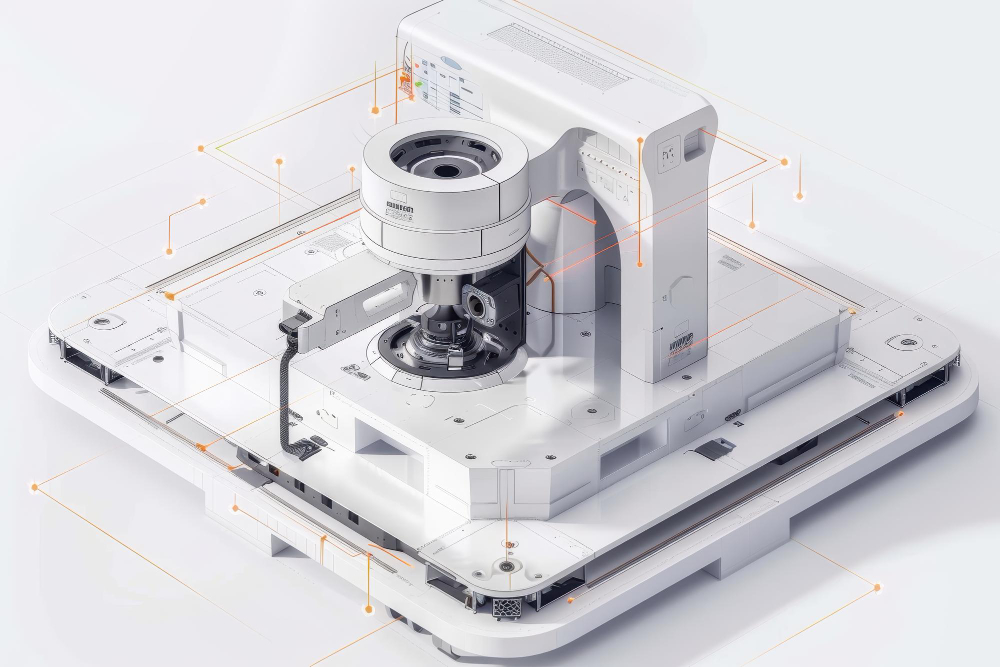
Zymr’s IoT healthcare development services align around six core needs. Each can stand alone or be combined into a unified program.
BLE (Bluetooth Low Energy) Device Integration
Bluetooth Low Energy has become one of the most common communication models across wearable health devices, portable monitors, and remote-care ecosystems. We engineer BLE connectivity frameworks supporting secure pairing, telemetry synchronization, offline recovery, device authentication, and continuous streaming workflows optimized for healthcare-grade reliability.
MQTT / CoAP / AMQP Protocol Engineering
Healthcare IoT ecosystems rely on lightweight messaging protocols capable of supporting continuous telemetry across constrained environments. We engineer MQTT, CoAP, and AMQP communication pipelines optimized for real-time vitals transmission, event-driven telemetry, low-latency streaming, and resilient medical device communication architecture.
IEEE 11073 Medical Device Communication
Standardized medical device communication remains essential for scalable interoperability. We engineer IEEE 11073-compliant device integration workflows supporting structured telemetry exchange, device normalization, and standardized clinical observation mapping across heterogeneous device ecosystems.
Serial / RS-232 Legacy Device Connectivity
Many hospitals still operate clinically critical legacy devices using serial communication standards. Replacing these environments outright is often unrealistic operationally and financially. We engineer gateway and protocol-conversion layers that modernize serial device ecosystems into cloud-connected and interoperable telemetry environments.
Wi-Fi, Zigbee & LoRaWAN for Hospital IoT
Different clinical environments require different communication models. We engineer Wi-Fi, Zigbee, and LoRaWAN connectivity architectures optimized for inpatient telemetry, RTLS tracking, wearable monitoring, low-power clinical devices, and distributed hospital IoT ecosystems.
USB / HID Medical Device Interfaces
Some medical devices still depend on USB and HID communication models for local telemetry exchange and workstation integration. We engineer interface abstraction layers and secure ingestion workflows enabling these devices to participate in broader interoperability ecosystems.
Protocol Translation & Gateway Engineering
Healthcare device ecosystems rarely operate on a single protocol standard. We engineer translation gateways capable of converting telemetry across BLE, MQTT, HL7, IEEE 11073, serial interfaces, and proprietary device protocols while maintaining operational consistency and clinical data integrity.
IoMT Gateway Development
Connected healthcare environments rarely operate with standardized device ecosystems. Hospitals often run hundreds of device models simultaneously across multiple vendors, communication standards, and telemetry formats. We engineer IoMT gateways that aggregate device traffic, normalize clinical telemetry, manage protocol translation, and route device data securely into EHR systems, analytics environments, and cloud platforms.
Edge Computing for Latency-Critical Processing
Some clinical workflows cannot tolerate cloud-processing latency. Cardiac monitoring, ventilator telemetry, infusion alerts, and bedside escalation systems often require near-instant local decision-making. We engineer edge-processing environments capable of running real-time telemetry analysis, alert prioritization, local device orchestration, and clinical rule execution directly at the hospital edge while synchronizing continuously with cloud infrastructure.
Edge AI Inference
AI-driven telemetry analysis becomes significantly more valuable when inference can occur directly at the bedside. Powered by ZOEY AI orchestration and advanced AI/ML engineering services, we build edge AI workflows supporting arrhythmia detection, deterioration scoring, anomaly analysis, alarm prioritization, and clinical signal processing with reduced latency and improved operational responsiveness.
Offline-Capable Device Integration with Cloud Sync
Clinical environments cannot assume continuous connectivity at all times. We engineer offline-capable integration systems with local buffering, deferred synchronization, telemetry persistence, and conflict-resolution workflows designed for operational resilience across hospital, ambulatory, and remote-care environments.
Device Provisioning & Fleet Management
Large-scale IoMT deployments require centralized visibility into device identity, firmware versions, connectivity health, configuration status, and lifecycle governance. We engineer provisioning and fleet-management infrastructure supporting device onboarding, telemetry governance, credential rotation, operational monitoring, and large-scale IoMT administration.
OTA Firmware Update Infrastructure
Medical device ecosystems increasingly require secure over-the-air firmware management to address vulnerabilities, update operational logic, and maintain cybersecurity posture. We engineer controlled OTA update pipelines with validation workflows, rollback protection, audit visibility, and healthcare-grade release governance.
FHIR R4 Device & Observation Resource Mapping
Modern healthcare interoperability depends on structured clinical data exchange rather than proprietary telemetry silos. We engineer FHIR-native pipelines mapping device telemetry into Device, Observation, Encounter, Patient, and CarePlan resources designed for operational interoperability across healthcare ecosystems. This allows device telemetry to participate directly in clinical workflows instead of remaining trapped inside monitoring dashboards.
Real-Time FHIR Streaming from Devices
Traditional device integration architectures often rely on delayed synchronization and batch-processing models. We engineer real-time FHIR streaming infrastructure capable of continuously routing device observations into EHR systems, analytics pipelines, and clinical alerting environments with low-latency interoperability.
IHE PCD-01 Implementation
IHE Patient Care Device profiles remain central to scalable clinical device interoperability. We implement PCD-01 Device Observation Reporter workflows supporting standardized telemetry exchange across bedside monitors, infusion devices, ventilators, and broader IoMT ecosystems.
IHE ACM Profile Integration
Alarm communication management requires structured escalation orchestration across clinical systems. We engineer IHE ACM integrations supporting alert routing, acknowledgment workflows, escalation management, and contextual clinical communication designed to reduce alarm fatigue operationally.
FHIR Subscription for Device-Triggered Alerts
Continuous telemetry becomes significantly more valuable when clinical systems can react dynamically to patient events. We engineer FHIR Subscription workflows enabling event-driven alerting, escalation routing, CDS activation, and operational workflow automation triggered directly from device telemetry changes.
Clinical Data Repository for Device Data
Connected healthcare environments generate enormous longitudinal telemetry datasets that require governed storage and analytics infrastructure. We engineer centralized repositories optimized for device telemetry retention, interoperability, AI model training, analytics processing, and operational clinical visibility. Our teams combine data engineering services with healthcare interoperability expertise to support large-scale streaming healthcare environments.
Epic Integration
We engineer Epic device integration workflows including flowsheet synchronization, patient-context mapping, ADT correlation, bedside telemetry ingestion, and SMART-on-FHIR integration models that allow device data to appear directly inside operational clinician workflows.
Cerner / Oracle Health Integration
Cerner CareAware and Oracle Health environments require structured interoperability architecture for large-scale device connectivity. We engineer telemetry synchronization, alert integration, patient-association workflows, and clinical observation streaming designed for enterprise Cerner deployments.
MEDITECH Device Connect
MEDITECH environments often require specialized interoperability and middleware orchestration to operationalize device telemetry effectively. We build integration layers supporting continuous telemetry ingestion, patient mapping, and workflow synchronization across MEDITECH clinical systems.
athenahealth, Allscripts & NextGen Connectivity
Ambulatory and outpatient healthcare ecosystems increasingly depend on connected-device telemetry as RPM and virtual-care adoption expands. We integrate IoMT ecosystems into athenahealth, Allscripts, and NextGen workflows with structured observation mapping and patient-context continuity.
ADT Event Correlation
Device telemetry loses clinical value when patient context becomes disconnected from operational workflows. We engineer ADT-aware telemetry systems that continuously correlate device observations with admissions, transfers, discharges, patient movement, and encounter context inside healthcare environments.
Nurse Call System Integration
Clinical escalation workflows increasingly depend on coordinated communication across alarms, nurse-call systems, mobile devices, and monitoring infrastructure. We engineer integration workflows that route critical telemetry events into operational communication environments in real time.
Lab / LIS Integration for POCT Devices
Point-of-care testing devices increasingly operate as connected telemetry endpoints within clinical environments. We integrate POCT systems into LIS and EHR ecosystems with structured observation mapping, patient association, quality controls, and operational traceability aligned with clinical workflows.
ML-Powered Alarm Prioritization
Healthcare environments generate overwhelming volumes of low-priority alarms that contribute directly to clinician fatigue and delayed response times. We engineer ML-powered prioritization systems capable of identifying clinically meaningful alerts while suppressing low-value noise intelligently.This is one of Zymr’s clearest differentiators.
Multi-Device Alarm Correlation
Critical patient deterioration rarely appears through a single telemetry signal alone. We engineer correlation engines capable of analyzing multiple device streams simultaneously including ECG, SpO2, ventilator data, blood pressure telemetry, and infusion workflows to improve alert quality and contextual awareness.
Context-Aware Alert Suppression
Not every abnormal telemetry event requires immediate escalation. We build context-aware suppression logic capable of reducing unnecessary notifications based on patient condition, care setting, active interventions, and broader telemetry context while preserving clinically significant escalation pathways.
Escalation Workflow Automation
Clinical alerts lose value when escalation workflows remain fragmented operationally. We engineer automated escalation systems supporting nurse routing, clinician notification chains, acknowledgment workflows, mobile escalation, and rapid response coordination integrated into broader clinical operations.
Alarm Analytics & Reporting
Hospitals increasingly require visibility into alarm burden, override frequency, escalation timing, and unit-level alert patterns. We engineer analytics systems that provide operational intelligence across alarm fatigue metrics, response behavior, workflow bottlenecks, and telemetry utilization trends.
Custom Clinical Alerting Rules Engine
Different healthcare organizations operate with different clinical protocols, escalation models, and patient populations. We engineer configurable clinical rules engines that allow hospitals to define custom telemetry thresholds, escalation workflows, suppression logic, and condition-aware monitoring rules without rebuilding the integration platform itself.
Patient Monitors
Patient monitors remain one of the largest continuous telemetry sources inside healthcare environments. We integrate bedside monitoring systems capturing heart rate, blood pressure, oxygen saturation, respiratory rate, temperature, and multi-parameter vitals into real-time clinical workflows, analytics platforms, and EHR ecosystems.
Ventilators & Respiratory Devices
Respiratory telemetry generates clinically critical signals that require continuous visibility and low-latency escalation handling. We engineer ventilator integration pipelines supporting waveform ingestion, respiratory-event monitoring, alarm synchronization, and contextual telemetry analysis across ICU and acute-care environments.
Infusion Pumps
Smart infusion pumps generate valuable operational and medication-delivery telemetry that often remains siloed from broader clinical systems. We integrate infusion workflows into EHR environments, alarm-management systems, medication administration workflows, and analytics platforms with operational traceability built in.
ECG & Cardiac Monitoring Devices
Continuous cardiac telemetry requires high-frequency streaming, contextual event analysis, and rapid escalation handling. We engineer integrations for telemetry systems, wearable ECG devices, bedside cardiac monitors, and remote cardiac monitoring environments capable of supporting arrhythmia detection and longitudinal cardiac analytics.
Continuous Glucose Monitors (CGM)
CGM telemetry creates continuous metabolic visibility for diabetes management and remote-care workflows. We build CGM integration systems supporting real-time glucose streaming, trend analysis, insulin correlation workflows, and FHIR-native observation mapping across clinical ecosystems.
Pulse Oximeters & Blood Pressure Monitors
Different healthcare organizations operate with different clinical protocols, escalation models, and patient populations. We engineer configurable clinical rules engines that allow hospitals to define custom telemetry thresholds, escalation workflows, suppression logic, and condition-aware monitoring rules without rebuilding the integration platform itself.
Sepsis Prediction from Continuous Vitals
Continuous telemetry creates opportunities to identify sepsis-risk patterns significantly earlier than episodic clinical observation alone. Powered by ZOEY AI infrastructure and advanced AI/ML engineering services, we engineer predictive analytics systems capable of identifying sepsis risk from longitudinal vitals telemetry up to 19 hours earlier in validated healthcare workflows.
Patient Deterioration Scoring
We build AI-assisted deterioration-scoring systems using NEWS2, MEWS, and custom telemetry-analysis models that continuously evaluate patient condition using device telemetry, behavioral trends, and contextual clinical signals to support earlier intervention workflows.
Cardiac Arrhythmia Detection
Continuous ECG telemetry generates high-frequency cardiac signals that require automated interpretation at scale. We engineer arrhythmia-detection systems capable of identifying abnormal rhythms, escalation thresholds, and clinically meaningful cardiac events across inpatient and remote-monitoring environments.
Predictive Maintenance for Medical Equipment
Connected medical devices generate operational telemetry that can also support biomedical engineering workflows. We engineer predictive-maintenance analytics systems capable of identifying device degradation patterns, operational anomalies, maintenance risk indicators, and equipment utilization trends before failures occur.
Population Health Analytics on Device Data
Connected-device telemetry becomes significantly more valuable when analyzed across patient populations rather than individual encounters alone. We engineer analytics environments supporting cohort analysis, utilization monitoring, disease progression visibility, operational workflow analysis, and population-level clinical intelligence derived from longitudinal device telemetry.
HIPAA-Compliant Device Architecture
Connected-device ecosystems continuously process protected health information across networks, gateways, cloud infrastructure, edge environments, and clinical applications. We engineer HIPAA-aligned device architecture with secure telemetry transmission, governed data access, encryption controls, audit logging, and operational visibility built directly into the integration stack.
FDA Pre/Post-Market Cybersecurity Compliance
FDA cybersecurity expectations for connected medical devices continue expanding across both pre-market and post-market operational requirements. We help healthcare organizations and device manufacturers engineer cybersecurity workflows aligned with FDA guidance covering risk analysis, vulnerability governance, incident response, firmware management, and secure software lifecycle practices.
SBOM Management
Software Bill of Materials governance is becoming increasingly critical for connected healthcare ecosystems. We engineer SBOM management workflows that provide visibility into software dependencies, vulnerability exposure, third-party libraries, and operational device risk across complex IoMT environments.
Device Identity Certificate Management
Medical-device trust models increasingly depend on strong device identity governance. We engineer X.509 and PKI-based certificate-management infrastructure supporting secure device authentication, credential rotation, encrypted communication, and operational identity verification across connected device fleets.
Network Micro-Segmentation for Medical Devices
Connected healthcare devices should never operate inside flat network architectures. We engineer micro-segmented IoMT environments that isolate device categories, restrict lateral movement, enforce traffic policies, and reduce operational exposure during cybersecurity incidents. Our teams combine healthcare engineering with advanced threat detection systems to secure connected clinical infrastructure continuously.
Encrypted MQTT / CoAP Transmission
Lightweight telemetry protocols still require enterprise-grade security controls in healthcare environments. We engineer encrypted MQTT and CoAP communication pipelines with secure credential handling, certificate-based authentication, and transport-layer protection aligned with healthcare cybersecurity requirements.
A healthcare provider needed to unify telemetry from bedside monitors, ventilators, infusion pumps, and cardiac systems across ICU environments. Zymr engineered a FHIR-native device integration platform with real-time telemetry streaming, ADT-aware patient mapping, and Epic integration workflows that improved clinical visibility while reducing operational silos across critical-care units.
Project Details →
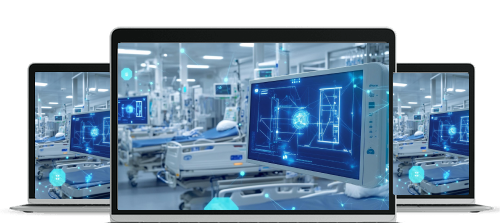
A hospital network struggling with alarm fatigue needed better prioritization across thousands of daily device alerts. Zymr built an intelligent alarm-management system with ML-powered prioritization, multi-device correlation, and escalation automation that reduced non-actionable alert noise while improving clinician responsiveness to critical events.
Project Details →
A medical device manufacturer needed to modernize legacy serial-connected devices without replacing deployed hardware. Zymr engineered a protocol-translation gateway layer that converted serial telemetry into secure cloud-connected FHIR streams, enabling modern interoperability, analytics, and EHR integration while extending the lifecycle of existing devices.
Project Details →
IoT medical device integration is the process of connecting medical devices, monitoring systems, wearable sensors, and healthcare equipment to broader clinical systems including EHRs, analytics platforms, remote monitoring ecosystems, and clinical decision-support environments using secure interoperability infrastructure.
Medical-device telemetry is typically integrated into EHR ecosystems using interoperability standards such as HL7 and FHIR combined with middleware, gateway translation, patient-context mapping, ADT synchronization, and structured observation streaming into clinical workflows.
IHE Patient Care Device profiles provide interoperability standards for clinical telemetry exchange between healthcare devices and operational systems. They standardize observation reporting, alarm communication, and telemetry workflows across heterogeneous device ecosystems.
Connected-device security requires device identity management, encrypted telemetry, network segmentation, firmware governance, vulnerability management, SBOM visibility, secure OTA updates, and continuous monitoring aligned with healthcare cybersecurity standards.
Yes. Legacy serial-connected devices can often be modernized using protocol-translation gateways, middleware abstraction layers, telemetry normalization, and cloud-integration infrastructure without replacing clinically operational hardware.
We engineer telemetry pipelines that normalize device observations, correlate patient context, trigger CDS workflows, support FHIR-native interoperability, and route clinically meaningful events directly into provider workflows and alerting systems.
Healthcare device ecosystems commonly use BLE, MQTT, CoAP, AMQP, IEEE 11073, HL7 v2, FHIR R4, serial communication standards, Wi-Fi, Zigbee, and proprietary vendor protocols depending on device category and operational environment.
FHIR Device resources represent connected healthcare devices within interoperability ecosystems. They allow telemetry, identifiers, device status, operational metadata, and clinical observations to integrate into structured healthcare workflows alongside patient and encounter data.
Alarm fatigue occurs when clinicians receive excessive volumes of low-priority or repetitive alerts, reducing responsiveness to clinically meaningful events. Intelligent integration systems improve alarm quality through prioritization, telemetry correlation, contextual suppression, and escalation orchestration.
Edge computing processes telemetry closer to the device itself rather than relying entirely on cloud infrastructure. In healthcare, this supports lower-latency alerting, bedside analytics, local telemetry processing, and operational resilience during connectivity disruptions.
FDA cybersecurity expectations increasingly include secure software lifecycle management, vulnerability governance, SBOM visibility, device identity controls, firmware governance, incident response planning, and ongoing post-market cybersecurity management for connected devices.
Pricing depends on device ecosystem complexity, interoperability scope, protocol diversity, EHR integration requirements, cybersecurity requirements, AI functionality, regulatory considerations, and engagement model. Some organizations require focused interoperability modernization while others need long-term dedicated IoMT engineering teams.
Connect with Zymr’s IoMT integration engineers for a technical deep dive into your device interoperability architecture, telemetry strategy, cybersecurity posture, and clinical integration roadmap.