
Free GCC Assessment with Experts

Healthcare Interoperability Services (FHIR/HL7)
Healthcare data is only as valuable as its ability to move securely, accurately, and intelligently across the care ecosystem. Zymr delivers Healthcare Interoperability Services that modernize legacy HL7 environments with FHIR R4/R5 implementation, HL7 to FHIR migration, SMART on FHIR application development, and enterprise interface engineering. We integrate seamlessly with EHR Development Services, Data Engineering Services, and Cloud Security Services to build interoperable platforms that meet the requirements of the 21st Century Cures Act, CMS interoperability mandates, and TEFCA. Beyond connectivity, we help healthcare organizations unlock AI powered clinical intelligence by combining interoperable data with AI/ML Services and Generative AI Development Services to accelerate analytics, automation, and better patient outcomes.


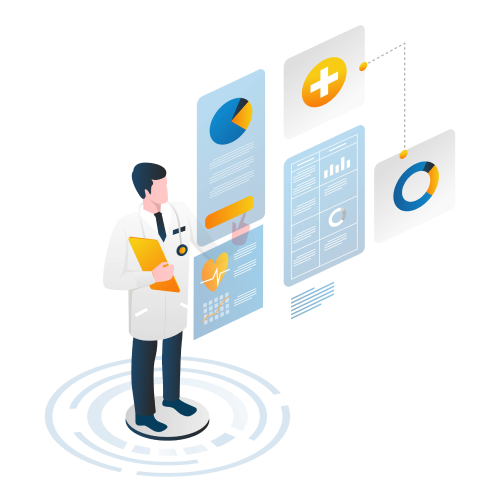
Healthcare organizations continue to rely on fragmented data spread across HL7 v2 messages, CDA documents, proprietary EHR systems, medical devices, and payer platforms. FHIR has emerged as the modern interoperability standard that connects these disconnected systems, while US mandates such as the 21st Century Cures Act, CMS interoperability rules, and TEFCA have made standardized data exchange a business imperative.As part of our broader Healthcare Software Engineering capabilities, Zymr helps providers, payers, and HealthTech companies modernize interoperability while preparing for AI-driven healthcare transformation. We then build on that connected foundation with AI, transforming interoperable clinical and claims data into real-time insights that help predict sepsis, reduce hospital readmissions, improve operational efficiency, and accelerate revenue recovery at enterprise scale.
FHIR R4/R5 +
HL7 v2/v3 + CDA + X12
Cures Act
CMS / TEFCA-ready
Sepsis 19hrs earlier on connected data
18 EMRs unified
FHIR vs. HL7: Understanding the Standards
Healthcare interoperability has evolved over decades, and most healthcare organizations today operate in environments where multiple standards coexist. While HL7 v2 continues to power the majority of clinical messaging, newer standards such as FHIR make healthcare data easier to access, exchange, and build applications around. Rather than replacing existing systems overnight, modern interoperability strategies bridge legacy HL7 environments with FHIR APIs, enabling organizations to modernize at their own pace while remaining compliant with evolving US healthcare regulations.

HL7 v2: The Foundation of Healthcare Messaging
HL7 v3 and CDA: Structured Clinical Documents
FHIR: Modern API Based Healthcare Interoperability
Modern healthcare applications also leverage:
- SMART on FHIR to securely launch third party clinical applications directly within EHR workflows.
- Bulk FHIR to exchange population scale datasets for analytics, quality reporting, and value based care initiatives.
- FHIR APIs to enable real time data exchange across providers, payers, digital health platforms, and connected medical devices.
Healthcare Interoperability Services We Deliver
Interoperability Strategy & Compliance Consulting
FHIR Implementation & Profiling (R4/R5)
HL7 to FHIR Migration & Interface Engineering
FHIR Server & API Development
AI Powered Clinical Intelligence on Interoperable Data
Payer, Provider & Connected Device Interoperability
The US Interoperability Mandates Driving FHIR Adoption
Healthcare interoperability is no longer a future-state modernization program. It is now a regulatory, operational, and revenue-critical requirement. The ONC 21st Century Cures Act, CMS-9115, CMS-0057-F, TEFCA, QHIN participation, and USCDI v3 are pushing healthcare organizations toward standardized, secure, API-based data exchange.
For providers, payers, EHR vendors, and digital health companies, this means legacy integration strategies are no longer enough. HL7 v2 feeds, CDA documents, payer files, prior authorization workflows, and EHR data must now be exposed through standards-based APIs, governed access models, and interoperable data frameworks.
Zymr helps healthcare organizations prepare for this shift by engineering FHIR-ready platforms, HL7 to FHIR migration pipelines, Patient Access APIs, Provider Directory APIs, Prior Authorization APIs, TEFCA-aligned exchange workflows, and USCDI-ready data models. The goal is not only compliance. It is to make healthcare data usable across care delivery, payer operations, patient engagement, analytics, and AI.
Key Requirements and Business Impact
Mandate | Core Requirement | Business Impact |
|---|---|---|
ONC 21st Century Cures Act | Prevent information blocking and enable secure electronic health information access through certified APIs | Increases pressure on providers and EHR vendors to modernize data access and reduce closed-system dependency |
CMS-9115 | Requires impacted payers to provide Patient Access APIs and Provider Directory APIs | Improves member access, payer transparency, and third-party app connectivity |
CMS-0057-F | Requires FHIR-based APIs for prior authorization, provider access, payer-to-payer exchange, and patient access | Reduces manual prior authorization workflows, improves turnaround times, and strengthens payer-provider data exchange |
TEFCA | Creates a nationwide trusted exchange framework for secure health information sharing | Enables scalable participation in national health data exchange beyond proprietary networks |
QHINs | Qualified Health Information Networks act as trusted exchange participants under TEFCA | Gives organizations a pathway to participate in national interoperability networks |
USCDI v3 | Defines standardized clinical data classes and elements for exchange | Improves consistency across FHIR resources, patient records, quality reporting, and analytics workflows |
Why Healthcare Organizations Must Prepare Now
FHIR compliance is not a single API project. It requires data normalization, terminology mapping, consent-aware access, identity matching, security controls, interface modernization, and strong API governance. Organizations that wait until compliance deadlines are close often face rushed architecture decisions, brittle integrations, and expensive remediation work.
A future-ready interoperability foundation allows healthcare organizations to move beyond compliance. It enables faster prior authorization, cleaner payer-provider exchange, better patient access, AI-ready clinical data, population health analytics, and more connected digital health experiences.
FHIR Implementation Layer
Device Connectivity & Fleet Layer
SMART on FHIR Application Development
Bulk FHIR for Population Health
FHIR API Development
FHIR Resource Mapping & Custom Profiles
Implementation Guides & Industry Standards
FHIR Server Layer
FHIR Server Implementation
We deploy enterprise-grade FHIR servers using HAPI FHIR, Firely Server, and Smile CDR to support secure, standards-compliant healthcare data exchange. Every implementation is designed for high availability, scalability, and seamless integration with existing healthcare systems.
Cloud Healthcare Platforms
Healthcare organizations are increasingly adopting cloud-native interoperability platforms to improve scalability and resilience. We implement FHIR solutions on AWS HealthLake, Azure Health Data Services, and Google Cloud Healthcare API, leveraging our Cloud Services expertise to accelerate modernization.
Event-Driven Microservices Architecture
Real-time interoperability requires systems that can process healthcare events as they occur. We design event-driven architectures that synchronize patient data across EHRs, payer systems, laboratories, and digital health applications with minimal latency.
High-Volume Patient Record Management
Enterprise healthcare organizations manage millions of patient records every day. Our FHIR platforms are engineered to process high-volume clinical transactions while maintaining consistent performance, reliability, and rapid API response times.
FHIR Security & Identity Management
Protecting patient information requires strong identity management, encryption, API security, audit logging, and continuous compliance with regulations such as HIPAA. Explore our Healthcare Data Security Best Practices guide to understand the security controls that support modern healthcare data exchange.
HL7 & Legacy Integration Layer
HL7 v2 Interface Development
HL7 v3, CDA & C-CDA Processing
HL7 to FHIR Mapping & Transformation
Interface Engine Engineering
X12, DICOM & EDI Integration
Legacy Modernization Without Rip-and-Replace
Terminology & Data Quality Layer
Terminology Management
Code System Harmonization & Mapping
Data Validation & Conformance
Master Patient Index (MPI) & Patient Matching
ETL & Data Transformation
US Regulatory Compliance Layer
NC 21st Century Cures Act
We help healthcare organizations implement standards-based interoperability that supports information sharing, certified APIs, and compliance with ONC information blocking requirements.
CMS-9115 Interoperability Rules
Our engineers develop Patient Access APIs, Provider Directory APIs, and payer interoperability solutions that align with CMS interoperability requirements while improving member experiences.
CMS-0057-F Prior Authorization APIs
We build FHIR-based Prior Authorization APIs and supporting workflows that help health plans prepare for the 2027 CMS mandate while reducing administrative overhead.
TEFCA & QHIN Readiness
Nationwide healthcare data exchange requires trusted interoperability frameworks. We design TEFCA-ready architectures that simplify connectivity with Qualified Health Information Networks (QHINs) and participating organizations.
USCDI v3 Data Standardization
USCDI provides the standardized data elements required for modern healthcare exchange. We help organizations map clinical information to USCDI standards, improving interoperability and regulatory compliance.
Healthcare Security & Compliance Engineering
Interoperability must be secure by design. Working alongside our Cloud Security Services, we implement encryption, consent management, audit logging, identity controls, and HIPAA-ready security across the interoperability stack.
HL7 & Legacy Integration Layer
Sepsis Prediction
Readmission & Deterioration Risk
Population Health Analytics
NLP for Clinical Documents
Clinical Decision Support
Healthcare Interoperability Services
Regional Hospital Network Unifies 18 EHRs Through FHIR Interoperability
A regional healthcare network struggled with fragmented patient records spread across 18 different EHR systems. Zymr engineered a FHIR-based interoperability platform that unified clinical data, processed more than 2.4 million patient encounters, and reduced ADT message errors by 68%. The new platform enabled secure, real-time data exchange while establishing a scalable foundation for future digital health initiatives.
Project Details →
Community Health Network Improves Early Sepsis Detection
A community health provider needed to integrate IoMT devices with its clinical systems to improve remote patient monitoring. Zymr implemented FHIR-based device interoperability, enabling continuous patient monitoring and AI-powered clinical analytics. The solution identified signs of sepsis up to 19 hours earlier and contributed to a 29% reduction in mortality.
Project Details →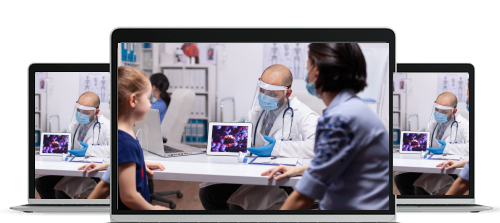
Health Plan Modernizes Revenue Cycle Intelligence
A mid-sized health plan wanted to improve claims processing and reduce reimbursement losses caused by fragmented payer data. Zymr unified clinical and claims information through an interoperable data platform and applied AI models to predict denials and optimize revenue workflows. The solution recovered more than $24 million while achieving over 91% prediction accuracy.
Project Details →
Why Zymr for Healthcare Interoperability Services?
Comprehensive US Regulatory Engineering
FHIR-Native Data Platform Engineering
End-to-End Interoperability Expertise
Connected Provider, Payer & Device Ecosystems
Enterprise Delivery Through Global Capability Centers
Who We Serve
Hospitals & Health Systems
Hospitals often operate multiple EHRs, departmental systems, laboratory platforms, and imaging applications that struggle to communicate with one another. We help health systems modernize legacy HL7 environments, implement FHIR-based interoperability, and enable secure, real-time data exchange that improves care coordination, operational efficiency, and patient outcomes.
Health Insurance Payers
Payers are under increasing pressure to comply with CMS interoperability mandates while improving member experiences. We build Patient Access APIs, Provider Directory APIs, Prior Authorization APIs, and payer-to-payer interoperability solutions that simplify regulatory compliance and create more connected healthcare experiences.
EHR & Health IT Vendors
Healthcare software vendors need interoperability capabilities that integrate easily with provider and payer ecosystems. We develop FHIR-native APIs, SMART on FHIR applications, and standards-compliant integration frameworks that accelerate product development and reduce implementation complexity for customers.
Digital Health & HealthTech Companies
From virtual care platforms to patient engagement solutions, digital health companies depend on secure access to healthcare data. We help organizations build interoperable applications that connect seamlessly with EHRs, payers, laboratories, pharmacies, and other healthcare systems while supporting rapid product growth.
Laboratories & Diagnostic Networks
Laboratories exchange thousands of orders and diagnostic results every day across multiple healthcare systems. We engineer standardized interoperability solutions that streamline laboratory workflows, improve reporting accuracy, and enable faster delivery of diagnostic information to clinicians.
Health Information Exchanges (HIEs) & QHINs
Health Information Exchanges and Qualified Health Information Networks require scalable, standards-based architectures to support secure data sharing across participating organizations. We design interoperability platforms that simplify large-scale information exchange while aligning with TEFCA and evolving nationwide interoperability initiatives.
Life Sciences & Pharmaceutical Organizations
Clinical research, decentralized trials, and real-world evidence initiatives require secure access to high-quality healthcare data. We help life sciences organizations integrate clinical, operational, and patient-generated data into standardized platforms that support research, regulatory reporting, and AI-driven analytics.
Government & Public Health Agencies
Public health organizations require interoperable systems that enable disease surveillance, immunization reporting, population health monitoring, and secure information exchange across healthcare networks. We build scalable interoperability platforms that improve data accessibility while supporting national and regional public health initiatives.
Frequently Asked Questions
What are Healthcare Interoperability Services?
Healthcare interoperability services enable healthcare organizations to securely exchange patient, clinical, administrative, and financial data across different systems. These services include FHIR implementation, HL7 integration, API development, data transformation, terminology management, and regulatory compliance, allowing providers, payers, and digital health platforms to communicate seamlessly.
What is FHIR (Fast Healthcare Interoperability Resources)?
FHIR is a modern interoperability standard that organizes healthcare information into reusable resources such as Patient, Observation, Medication, and Encounter. These resources are exchanged through secure APIs, enabling faster integration between EHRs, payer systems, laboratories, medical devices, and healthcare applications.
What does the 21st Century Cures Act require?
The ONC 21st Century Cures Act promotes secure healthcare data exchange by prohibiting information blocking and requiring certified health IT systems to provide standardized API access. The goal is to improve patient access to health information and simplify interoperability across the healthcare ecosystem.
What are TEFCA and QHINs?
TEFCA (Trusted Exchange Framework and Common Agreement) establishes a nationwide framework for secure health information exchange. Qualified Health Information Networks (QHINs) serve as trusted intermediaries that enable providers, payers, public health agencies, and other organizations to exchange healthcare data at a national scale.
How do you migrate from HL7 v2 to FHIR?
HL7 v2 to FHIR migration typically involves mapping legacy messages to FHIR resources, validating clinical data, implementing transformation pipelines, and deploying FHIR APIs alongside existing integrations. Most organizations adopt a phased approach that modernizes interoperability without disrupting current clinical operations.
Can interoperable healthcare data support AI initiatives?
Yes. Standardized FHIR data provides a reliable foundation for AI applications such as clinical decision support, population health analytics, denial prediction, sepsis detection, readmission risk analysis, and intelligent clinical documentation. High-quality interoperable data significantly improves the accuracy and scalability of healthcare AI models.
What is the difference between HL7 and FHIR?
HL7 is a family of healthcare data exchange standards, while FHIR is the latest standard developed by HL7. Traditional HL7 v2 uses structured messages for clinical communication, whereas FHIR uses modern RESTful APIs and standardized resources, making healthcare data easier to integrate with cloud applications, mobile platforms, and AI solutions.
What is SMART on FHIR?
SMART on FHIR is a security and application framework that enables third-party applications to securely connect with EHR systems using standardized FHIR APIs. It allows clinicians to access integrated applications without separate logins while maintaining secure, role-based access to patient information.
What are the CMS interoperability rules?
CMS interoperability rules require impacted health plans to provide Patient Access APIs, Provider Directory APIs, and secure payer-to-payer data exchange using FHIR standards. CMS-0057-F further expands these requirements by mandating FHIR-based Prior Authorization APIs beginning in 2027.
What is USCDI v3?
The United States Core Data for Interoperability (USCDI) v3 defines standardized clinical data elements that healthcare organizations should exchange using interoperable technologies such as FHIR. It improves consistency across patient records, quality reporting, and healthcare analytics.
Which interface engines does Zymr support?
Zymr engineers and integrates healthcare interoperability solutions using leading interface engines including Mirth Connect, Rhapsody, Cloverleaf, Corepoint, Qvera, and Iguana. We also develop custom integration pipelines for organizations with proprietary interoperability environments.
How does Zymr deliver Healthcare Interoperability Services?
Zymr provides end-to-end interoperability engineering, from interoperability strategy and FHIR implementation to HL7 modernization, cloud-native integration, regulatory compliance, and AI-ready data platforms. Our dedicated engineering teams help healthcare organizations modernize existing ecosystems while building secure, scalable, and future-ready interoperability solutions.
Ready to achieve true interoperability FHIR/HL7 compliant, AI-activated, and US-mandate-ready?
Zymr delivers healthcare interoperability services: FHIR R4/R5 implementation, HL7-to-FHIR migration, interface engines, and CMS/Cures Act/TEFCA compliance, then layers AI on the connected data, via GCC squads at 40–60% cost advantage.

.svg)
.svg)
.svg)
.svg)
.svg)
.svg)