
Free GCC Assessment with Experts

Resource Management Systems
Stop managing resources in spreadsheets. Start optimizing them. Off-the-shelf planning tools work for standard teams, but they break down when organizations need industry-specific workflows, complex staffing rules, multi-project allocation, or deep system integrations. Zymr builds custom resource management systems with AI-powered scheduling, real-time capacity planning, workforce optimization, and cloud-native architecture tailored to how your business actually operates.



A resource management system is the operational software layer that helps an organization plan, allocate, schedule, and optimize people, skills, time, equipment, and capacity across projects and business functions. In practice, that means much more than a scheduling board: it includes utilization tracking, demand forecasting, bench visibility, workload balancing, conflict detection, timesheet workflows, and decision-ready analytics that help leaders match available resources to business demand.
That is where many SaaS tools hit their limit. Products like Float, Resource Guru, Runn, and Kantata are strong for standard planning use cases, but enterprises with healthcare staffing rules, matrix organizations, proprietary allocation logic, or multi-entity delivery models often need more flexibility than prebuilt products can provide. Zymr engineers custom RMS platforms that improve utilization, reduce bench cost, support compliance-heavy scheduling, and turn resource planning into
Why custom resource management
Most off-the-shelf tools are designed for broad adoption, which means they favor generalized workflows over business-specific logic. That works until a company needs credential-aware healthcare scheduling, billable utilization targets for IT services, equipment and maintenance windows in manufacturing, or what-if capacity planning tied directly to sales pipeline and hiring plans.
A custom resource management system becomes the better choice when the organization needs:
- Proprietary allocation logic that a SaaS platform cannot model cleanly.
- Deep integration with ERP, HRIS, CRM, finance, and project systems.
- Industry-specific compliance and staffing workflows.
- Real-time analytics and cost visibility that go beyond standard utilization reports.
- AI-driven optimization for forecasting, matching, and conflict resolution.
The business upside is direct: better-fit RMS platforms improve resource utilization, reduce scheduling conflicts, make hiring decisions more data-driven, and help organizations protect margin by understanding where talent and time are being overused, underused, or misallocated.
Resource management development needs
RMS strategy and consulting
Custom RMS platform development
RMS integration and data migration
AI-powered resource optimization
Industry-specific RMS modules
RMS modernization and SaaS migration
RMS engineering capabilities
Core scheduling and allocation engine

Capacity planning and forecasting
Utilization and performance analytics
AI-powered resource optimization
Industry-specific modules
Custom RMS vs off-the-shelf tools
| Option | Best for | Tradeoff |
|---|---|---|
Float / Resource Guru / Runn / Kantata | Standard planning, scheduling, and utilization workflows | Faster start, but limited flexibility for proprietary logic or industry-specific workflows |
ERP module | Organizations that want resource management embedded inside a broader back-office suite | Good data consistency, but resource workflows may become secondary to ERP structure |
Custom RMS | Enterprises with unique staffing models, complex integrations, or commercial product goals | Higher upfront investment, stronger fit, control, and long-term differentiation |
RMS vs ERP vs project management
| System | Primary role | Best use |
|---|---|---|
RMS | Allocate and optimize people, skills, time, and capacity | Staffing, scheduling, utilization, workforce planning |
ERP | Manage core business processes, finance, procurement, and standardized records | Enterprise-wide financial and operational control |
Project management software | Manage tasks, deadlines, collaboration, and delivery execution | Daily work coordination and project execution |
Integration and ecosystem layer
A custom RMS only works if it fits into the systems people already use. We integrate with:
- ERP systems for finance, procurement, and master records. Our API development services build the integration layer connecting RMS to ERP, HRIS, CRM, and payroll platforms with secure, governed connectors.
- HRIS and HCM platforms for employee data, leave, and org structure.
- CRM systems for forecast demand and pipeline-based planning.
- Financial tools for billing, costing, and margin analysis.
- Calendars and collaboration tools for day-to-day scheduling visibility.
FinOps and resource economics layer
This is one of the strongest differentiation areas in the brief. Many tools report utilization, but fewer help organizations understand the economics behind resource decisions. We build:
- Cost-per-resource attribution.
- Revenue-per-resource modeling.
- Margin impact simulation.
- Bench cost tracking.
- Cost-to-capacity reporting.
- Cloud workload cost awareness for RMS platforms where infrastructure economics matter.
Architecture and platform layer
We engineer RMS platforms with:
- Cloud-native deployment across AWS, Azure, and GCP. Our cloud-native engineering services provide the multi-cloud infrastructure for scalable, secure RMS platforms.
- Microservices and API-first architecture where scale and modularity matter.
- Multi-tenant SaaS models for commercial RMS products.
- Mobile-first interfaces for frontline scheduling and approvals.
- RBAC and SSO for enterprise security.
- Event-driven updates for real-time availability and conflict detection.
- Offline-capable support where field or distributed operations require it.
Resource Management Systems
Integration hub platform engineering for supply chain
A lakehouse-backed integration platform supporting analytics across 200+ sources demonstrates Zymr’s ability to build enterprise-grade multi-system platforms — a strong fit for RMS environments where data unification and operational visibility are essential.
Project Details →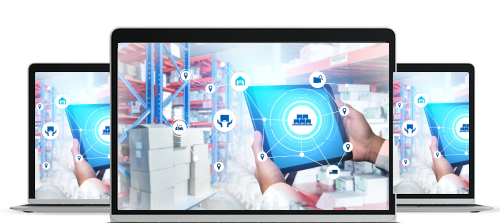
Regional hospital network interoperability engagement
A 12-hospital environment with 18 EMRs and 2.4 million annual encounters demonstrates healthcare operational complexity at scale. That kind of multi-site coordination supports the healthcare workforce management angle of the RMS story.
Project Details →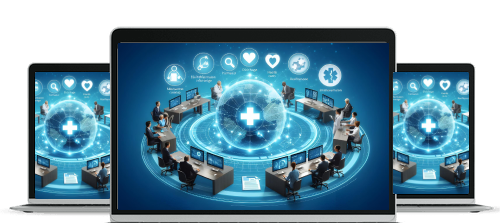
Health plan revenue cycle AI
An AI-powered predictive analytics engagement with 91 percent prediction accuracy and $24 million recovered shows Zymr’s ability to apply machine learning to operational optimization problems — directly relevant to forecasting, anomaly detection, and planning intelligence in RMS.
Project Details →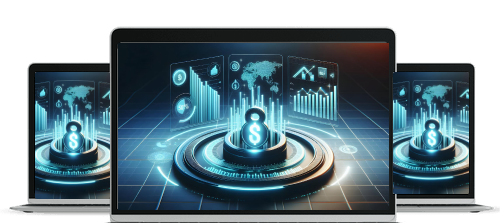
Industries we serve
We build resource management systems for:
- Healthcare and life sciences organizations managing staffing complexity and compliance.
- IT services and consulting firms tracking billable utilization and bench.
- Professional services and agencies balancing delivery, margin, and staffing.
- Manufacturing and supply chain teams coordinating people and assets.
- Construction and engineering firms allocating crews, equipment, and site schedules.
- Financial services teams managing regulated operations and specialist pools.
- Retail and logistics businesses balancing distributed workforce demand.
- SaaS and technology companies building internal planning systems or commercial RMS products.
Why Zymr
AI-powered optimization is part of the platform
We engineer for industry-specific workflows
FinOps-aware resource economics
Full-stack product engineering
GCC squads for sustained development
Solutions we deliver
Greenfield custom RMS build
Legacy scheduling modernization
Healthcare workforce management platform
AI-powered resource intelligence platform
Tech Stack
Typical RMS builds use:
- Frontend: React, Angular, Vue, React Native, Flutter.
- Backend: Node.js, Python, Java/Spring Boot, .NET.
- Databases: PostgreSQL, MongoDB, Redis, Elasticsearch.
- Cloud: AWS, Azure, GCP.
- AI/ML: scikit-learn, TensorFlow, PyTorch, optimization algorithms.
- Real-time: WebSockets, Kafka, Redis Pub/Sub.
- Integrations: REST APIs, GraphQL, webhooks, prebuilt connectors.
- DevOps: Docker, Kubernetes, CI/CD, Terraform.
- Observability: Datadog, Prometheus, Grafana, custom dashboards.
Resource Management Systems FAQs
What is a resource management system?
A resource management system is software used to plan, schedule, allocate, and optimize people, skills, time, and capacity across projects or operations. It typically includes scheduling, utilization tracking, forecasting, conflict detection, and reporting.
When should a company build a custom RMS?
A custom RMS makes sense when the business has complex workflows, industry-specific rules, proprietary allocation logic, deep integration needs, or wants to launch its own RMS product.
How does AI improve resource management?
AI improves resource management by forecasting demand, recommending best-fit assignments, detecting utilization anomalies, predicting capacity gaps, and helping resolve conflicts more intelligently.
Do you build resource management systems for healthcare?
Yes. Healthcare RMS platforms often require credential tracking, shift optimization, acuity-aware staffing, float pool management, fatigue rules, and compliance-heavy scheduling.
Can you build a multi-tenant SaaS resource management product?
Yes. We can build multi-tenant RMS products for SaaS businesses, including role-based access, pricing-ready architecture, analytics, integrations, and customer administration.
What is the difference between resource management software and ERP?
Resource management software focuses on allocation, capacity, utilization, and scheduling, while ERP systems manage broader business processes such as finance, procurement, HR, and standardized enterprise data.
What features should a resource management system include?
Core features usually include scheduling, capacity planning, utilization tracking, timesheets, conflict detection, reporting, availability management, integrations, and increasingly AI-powered forecasting and assignment support.
Can you integrate a custom RMS with ERP and HRIS tools?
Yes. A custom RMS can be integrated with ERP, HRIS, CRM, calendars, finance systems, and project management tools so data flows cleanly across the planning stack.
What is the difference between resource management and project management software?
Resource management software focuses on who or what is available and how to allocate capacity, while project management software focuses on tasks, deadlines, collaboration, and execution.
How does Zymr price RMS development services?
Pricing depends on the scope, industry complexity, AI requirements, integration breadth, deployment model, and whether the engagement is project-based or a dedicated GCC team.
Ready to build a resource management system that actually fits your operations?
Zymr engineers custom RMS platforms with AI-powered scheduling, real-time capacity planning, industry-specific modules, and cloud-native scalability for organizations that have outgrown rigid tools.

.svg)
.svg)
.svg)
.svg)
.svg)
.svg)