
Free GCC Assessment with Experts

AI-Powered Mobile Workforce Apps
Zymr engineers custom mobile workforce applications for field technicians, home care nurses, logistics drivers, and deskless workers across the US built offline-first, integrated with your ERP, EHR, and CRM, and engineered for the real-world conditions your teams face every day.


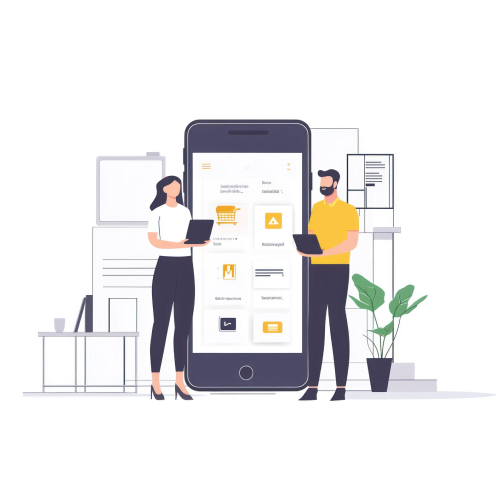
Over 2.7 billion deskless workers globally rely on mobile apps to do their jobs, yet most off-the-shelf workforce management platforms are built for median use cases, not your specific clinical workflows, inspection processes, or integration requirements. When your home care nurses need FHIR-integrated patient data on their phones, your field technicians need to work in a no-signal environment for eight hours, or your scheduling logic is too complex for any existing platform's rules engine, that is when custom mobile workforce application development delivers ROI that a SaaS license never can.
Zymr's mobile development teams build workforce apps that fit your exact operations, comply with your specific regulations, and integrate with the enterprise systems you already run. We are not a platform vendor. We are the engineering partner enterprises choose when off-the-shelf tools reach their limits.
Why Custom Mobile Workforce Application Development
Most organizations exploring mobile workforce tools arrive at the same crossroads. Buying a platform like IFS or Skedulo is fast and comes with a proven UX, but it is also rigid, expensive at scale, and impossible to adapt when your workflows do not match the platform's assumptions. Building custom takes longer upfront but delivers an app that fits your exact operations, eliminates per-seat license costs forever, and gives you full IP ownership.Here is how the two paths compare:
Off-the-Shelf Platforms (IFS, Skedulo, Deputy) | Custom Development (Zymr-Built) | |
|---|---|---|
Deployment Speed | Fast | 8–24 weeks depending on scope |
Workflow Fit | Median use cases only | Exact fit to your operations |
Compliance | Generic; cannot meet HIPAA custom requirements | HIPAA, GDPR, OSHA by design |
EHR/ERP Integration | Limited or via expensive add-ons | Deep native integration |
Offline-First | Partial or unavailable | Full offline architecture as standard |
AI Customization | Vendor roadmap only | AI features you define and own |
Long-Term Cost | Escalating per-seat license | One-time build, you own the IP |
Scalability | Constrained by platform tier | Scales with your architecture |
Signs you need custom development
- Your workflows are too complex or industry-specific for any standard platform
- You need deep HIPAA-compliant integration with Epic, Cerner, or another EHR
- Field workers operate in environments with limited or zero connectivity
- You operate in a regulated industry requiring specific audit trails or data residency
- You are paying $200,000 or more annually in platform licenses and still customizing
- Your scheduling logic requires AI or rules beyond what platforms offer
- You are building a workforce app as a product to sell to clients
Mobile Workforce App Services
Mobile Workforce App Consulting and Strategy
Custom iOS and Android Workforce App Development
Cross-Platform Mobile Workforce Apps (React Native and Flutter)
Offline-First Mobile App Architecture
Legacy Workforce App Modernization
Mobile Workforce App Integration Services
EHR and EMR Integration for Healthcare Field Workers
We integrate mobile workforce apps with Epic, Cerner, and Athenahealth via FHIR R4 APIs so that home care nurses, mobile phlebotomists, care coordinators, and clinical field staff have patient data, care plans, and documentation workflows on their devices. For full-stack healthcare platform engineering, explore our healthcare IT services and solutions. Every integration is HIPAA-compliant with PHI access controls, audit logging, and session management that satisfies hospital security review and procurement requirements.
ERP and SAP Integration for Field Technicians
Field technicians need work orders, parts inventory, asset history, and job completion sign-off integrated with the ERP that drives billing and operations. We build SAP, Oracle, and Microsoft Dynamics integrations that surface the right ERP data on the technician's device in a form that is usable in the field, not just a mobile view of a desktop screen.
CRM Integration for Field Sales
Salesforce, HubSpot, and Veeva Salesforce Health Cloud integrations give field sales and pharmaceutical rep teams account data, call planning tools, sample management, and activity logging directly on their devices. Sync happens automatically so CRM records reflect field activity in real time without requiring reps to duplicate effort in the office.
IoT and Sensor Integration for Equipment Field Service
We connect mobile workforce apps to IoT sensors, industrial equipment APIs, and wearable devices using Azure IoT Hub, AWS IoT Core, and MQTT protocols. Field technicians receive predictive maintenance alerts triggered by equipment sensor data before failures occur, and inspection apps pull real-time readings from equipment directly into digital checklists and work orders.
Mobile Workforce App Capabilities
Core Workforce Features

Field Productivity Features
AI and Intelligence Layer (Zymr Differentiator)
Management and Supervisor Features
Compliance and Security Features
Integration and Platform Layer
DevOps and Deployment Layer
How We Transform Mobile Workforce Operations
Healthcare Field Worker App: IoMT-Integrated Mobile Alerts for a 4,500-Bed Hospital Network
A large community health network needed a mobile app to deliver real-time IoMT alerts from wearables and bedside monitors to nursing staff across its 4,500-bed system. Zymr developed a HIPAA-compliant iOS and Android app integrated with the hospital’s IoMT platform using HL7 FHIR APIs, enabling one-tap alert acknowledgment and full audit logging. The solution improved clinical response times by 34%, reduced workflow disruption compared to pagers, and now processes over 2 million alert events monthly across all facilities.
Project Details →
Logistics and Distribution Mobile Workforce App: Global Supply Chain Field Teams
A global distribution company needed a mobile app to manage field teams across complex supply chains in North America and Europe. Zymr developed a cross-platform React Native app with offline-first capabilities, real-time route optimization integrated with the WMS, and live supervisor dashboards. The solution reduced last-mile delivery exceptions by 28% in six months, eliminated paper-based proof-of-delivery, cut supervisor call time by over 50%, and now supports 3,000+ field workers across 14 countries.
Project Details →
Population Health Coordinator Mobile App: 19 Percent Readmission Reduction
A health system developing a population health program needed a mobile app to equip care coordinators with real-time risk data and care tools during home visits. Zymr built an offline-capable iOS app integrated with Epic EHR via FHIR R4, enabling access to patient risk scores, care gaps, call scripts, and documentation workflows—even in low-connectivity areas—with automatic syncing. The solution drove a 19% reduction in 30-day readmissions within 12 months and now supports five active care management programs as a primary data entry platform.
Project Details →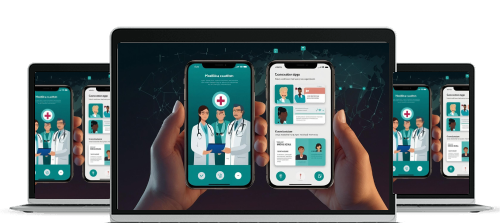
Industries We Serve
Healthcare
Healthcare mobile workforce apps carry requirements no other industry shares. FHIR integration with Epic and Cerner, PHI access controls, HIPAA audit trails, clinical workflow alignment, and operation in the connectivity conditions of home visits and facility environments all demand engineers who understand clinical operations as well as mobile architecture. Zymr has over 50 healthcare engineers with direct experience in mobile clinical applications, and the US home health market at $176 billion in 2025 represents the largest single vertical we serve.
Logistics
Driver apps for route optimization, proof of delivery, customer communication, exception reporting, and WMS and TMS integration are the core of logistics mobile workforce solutions. We build delivery apps with real-time route recalculation, GPS-verified proof of delivery, customer signature capture, and exception escalation workflows that reduce delivery failures and eliminate paper-based processes.
Retail and Merchandising
CPG and retail merchandising field apps manage store visit planning, planogram compliance assessment, shelf audit with photo evidence, promotional execution verification, and visit reporting. We build merchandising apps that give field teams and their managers real-time visibility into execution quality across hundreds or thousands of retail locations.
cybers
Cybersecurity mobile applications help organizations protect sensitive data, manage threats, and ensure secure access across devices and environments. We build secure mobile apps with features like multi-factor authentication, biometric login, encrypted data storage, secure APIs, and real-time threat detection. Our solutions enable security teams and users to monitor risks, prevent breaches, and maintain compliance while ensuring seamless and secure user experiences across enterprise and consumer applications.
Why Zymr for Mobile Workforce Application Development
AI-Native Mobile Workforce Engineering
Healthcare Mobile Workforce Domain Depth
Offline-First Architecture as a Named Engineering Discipline
End-to-End Integration Capability (EHR, ERP, CRM, IoT)
GCC Mobile Engineering Squads
Solutions We Deliver
Field Service Mobile Apps
Healthcare Field Worker Apps (Nurses, Home Care, Clinical Field Staff)
Construction and Inspection Apps
Delivery and Logistics Driver Apps
Pharmaceutical and Medical Device Sales Rep Apps
Deskless Worker Productivity Platforms (Zymr Differentiator)
Mobile Workforce Management Platform
Tech Stack
- Mobile: React Native, Flutter, Swift (iOS), Kotlin (Android), Xamarin
- Backend: Node.js, Python (Django/FastAPI), .NET, Java Spring Boot
- AI and ML: TensorFlow Lite, Core ML, ONNX Runtime (on-device AI), GPT-4o API, ZOEY Accelerator
- Database: PostgreSQL, MongoDB, SQLite (offline-first), Firebase Realtime DB, WatermelonDB
- Cloud: AWS (Amplify, Lambda, API Gateway, IoT Core), Azure (App Service, IoT Hub), GCP (Cloud Run, Firebase)
- Integrations: HL7/FHIR R4, SAP Connectors, Salesforce API, Oracle REST, Microsoft Dynamics, REST/GraphQL
- DevOps: GitHub Actions, Fastlane, Bitrise, Firebase App Distribution, TestFlight, CodePush
- Security: Auth0, AWS Cognito, OWASP Mobile Security Framework, AES-256, TLS 1.3, Biometric APIs
Mobile Workforce Application Development FAQs
What is a mobile workforce application?
A mobile workforce application is a software application designed for smartphones and tablets that enables organizations to manage, coordinate, and communicate with employees who work outside a fixed office location. Mobile workforce apps typically provide field workers with job assignments, scheduling information, navigation, digital forms, and integration with back-office systems, while giving supervisors real-time visibility into field operations through dashboards and reporting tools. Custom mobile workforce apps are built to an organization's specific workflows, compliance requirements, and enterprise system integrations rather than fitting operations to a pre-built platform.
How long does it take to develop a custom mobile workforce application?
Simple mobile workforce apps with basic scheduling, GPS tracking, and work order management typically take eight to twelve weeks from requirements to production. Mid-complexity apps with offline-first architecture, multiple system integrations, and custom AI features typically take fourteen to twenty weeks. Full custom workforce management platforms with field and supervisor applications, web dashboards, scheduling engines, and analytics layers typically require twenty to thirty weeks depending on integration complexity and feature scope. We deliver in phases so field workers are using the first production version within the first half of the engagement timeline.
What makes an offline-first mobile workforce app different from a regular app?
A regular mobile app that loses connectivity stops working or degrades significantly, which is unacceptable for field workers in tunnels, basements, rural areas, or industrial facilities with signal-blocking infrastructure. An offline-first app stores all data required for the current work session in encrypted local storage before the worker leaves connectivity, queues every write operation locally with conflict resolution metadata, syncs automatically and silently when connectivity is restored, and presents the user with a complete, functional experience regardless of network state. Offline-first is an architectural commitment made at the beginning of development that affects every decision about data modeling, API design, and user experience flow it cannot be retrofitted onto an app not designed for it.
Can a custom mobile workforce app integrate with our existing ERP or EHR system?
Yes. Zymr builds integration layers that connect mobile workforce apps to SAP, Oracle, and Microsoft Dynamics ERP systems using vendor-supported APIs and connector frameworks. For healthcare systems, we integrate with Epic, Cerner, and Athenahealth via FHIR R4 APIs with SMART on FHIR authentication. For Salesforce and HubSpot CRM integrations, we use REST and GraphQL APIs with bidirectional sync. Every integration is designed with the reliability, retry logic, and error handling appropriate for a production system, and integration behavior is fully tested against real system environments before go-live.
How does AI improve mobile workforce management apps?
AI improves mobile workforce apps in several practical ways that directly affect field productivity and operational cost. Smart scheduling algorithms reduce travel time between jobs by 15 to 25 percent and improve first-time fix rates by matching job requirements to technician skills and certifications. Route optimization recovers 60 to 90 minutes of productive field time per worker per week by minimizing total travel distance across a day's job schedule. Predictive maintenance alerts from IoT sensor data prevent equipment failures that cost significantly more to repair reactively than proactively. Conversational AI field assistants give workers immediate access to manuals and procedures without interrupting supervisors or searching intranet portals on a mobile screen.
What industries in the US most commonly use custom mobile workforce applications?
The US industries with the highest adoption of custom mobile workforce apps are healthcare and home care (driven by HIPAA integration requirements that SaaS platforms cannot meet), field service and utilities (driven by work order and ERP integration complexity), logistics and last-mile delivery (driven by WMS integration and proof-of-delivery requirements), construction and inspection (driven by compliance documentation and offline requirements on job sites), pharmaceutical sales (driven by FDA and OIG compliance requirements), and insurance field claims adjustment (driven by legally defensible evidence capture requirements). Each of these industries has workflow and compliance characteristics that standard SaaS platforms address inadequately, which creates the demand for custom development.
What is the difference between buying a mobile workforce management platform and custom development?
Buying a platform like IFS, Skedulo, or Deputy gives you a pre-built, proven product that deploys quickly and covers standard scheduling, tracking, and communication workflows. Custom development gives you an application designed around your exact operations, your specific compliance requirements, and your existing enterprise systems. The right choice depends on how closely your workflows match the platform's assumptions. Organizations with complex clinical workflows, deep EHR or ERP integration requirements, strict HIPAA compliance needs, or a need to own the application IP typically find that custom development delivers better ROI over a three to five year horizon than paying escalating per-seat license fees for a platform they still have to customize extensively.
What features should a mobile workforce app include for field technicians?
A well-designed field technician app should include real-time job dispatch with push notifications, GPS navigation to job sites, digital work orders with photo evidence capture, parts and inventory management, customer signature capture at job completion, offline operation for connectivity-limited environments, integration with the ERP or WMS that manages billing and parts, and barcode or QR scanning for asset identification. For organizations operating equipment-intensive field service, IoT sensor data integration and predictive maintenance alerts are increasingly important features that prevent costly breakdowns and reactive service calls.
How do you build a HIPAA-compliant mobile workforce app for healthcare field workers?
HIPAA compliance for a mobile workforce app requires addressing the Security Rule's technical safeguards at every layer of the architecture. We implement AES-256 encryption for all PHI stored on the device, TLS 1.3 for all data transmitted between the device and server, biometric authentication with session timeout and auto-lock, remote wipe capability for lost or stolen devices, role-based access control that limits PHI access to the specific data each care team role needs, and comprehensive audit logging for every PHI access event. We also address the administrative and physical safeguard requirements by documenting the security architecture, providing BAA-compatible cloud infrastructure, and conducting a security review against the HIPAA Security Rule checklist before any app handling PHI goes to production.
What technology is used to build cross-platform mobile workforce apps?
React Native and Flutter are the two dominant frameworks for cross-platform mobile workforce app development. React Native uses JavaScript and TypeScript with a bridge to native platform components, making it a natural choice for organizations with existing JavaScript engineering capability. Flutter uses the Dart language and renders its own UI components for pixel-perfect cross-platform consistency and strong animation performance. Both frameworks support native module bridges for hardware integrations, deliver performance adequate for demanding workforce app use cases, and maintain separate iOS and Android codebases only for platform-specific native modules. The right choice depends on your team's existing skills, your UX requirements, and the specific hardware capabilities your app needs to access.
How much does it cost to develop a custom mobile workforce application in the US?
Custom mobile workforce app development costs in the US depend primarily on feature complexity, integration requirements, and the development model chosen. A focused single-platform app with standard features typically costs $80,000 to $150,000 with a US-based development team. A full-featured cross-platform app with offline-first architecture, multiple enterprise integrations, and AI features typically costs $200,000 to $500,000. Enterprise workforce management platforms with field and supervisor applications, web dashboards, and analytics layers range from $400,000 to $1,000,000 or more. Zymr's GCC delivery model, with Silicon Valley architecture oversight and India-based engineering, delivers the same quality at 40 to 60 percent lower cost than equivalent US-based development shops.
Do you provide ongoing support and maintenance for mobile workforce apps post-launch?
Yes. Zymr provides post-launch support covering bug fixes, OS version compatibility updates for new iOS and Android releases, performance monitoring and optimization, security patch management, feature enhancements, and integration maintenance when source system APIs change. Support is available in tiered SLA models with 15-minute response times for P1 production issues. For organizations that prefer a managed model, we provide full operational ownership including proactive monitoring, scheduled optimization, and monthly health reporting so engineering teams can focus on new feature development rather than app operations.
Ready to build the mobile app your field workforce will actually use every day?
Connect with Zymr's mobile development team for a free requirements workshop and 30-day proof of concept. Contact Zymr

.svg)
.svg)
.svg)
.svg)
.svg)
.svg)