
Healthcare Data Analytics: Turning Clinical Data Into Better Patient Outcomes

Nikunj Patel
Associate Director of Software Engineering
April 1, 2026
Key Takeaways
- Analytics helps bring together scattered healthcare data and turns it into useful insights for both clinical care and operations.
- With predictive and prescriptive analytics, teams can step in earlier and make better decisions.
- Data from EHRs, claims, labs, operations, and patients must work together.
- Using risk modeling and improving workflows can help reduce readmissions and cut unnecessary costs.
- Analytics will not scale unless there is a solid foundation, good governance, and aligned workflows.
Healthcare isn’t just about medicine anymore; it’s about data. Every test result, clinical note, scan, survey, wearable readout, and insurance claim adds to a growing pool of clinical data. But raw data doesn’t improve outcomes on its own. It has to be interpreted, connected, and acted on. Healthcare data analytics does exactly that: it transforms complex clinical data into actionable insights, enabling clinicians, administrators, and care teams to make faster, smarter decisions that improve patient outcomes and streamline care.
Beyond 2026, healthcare data analytics has evolved from looking backward at what already happened to delivering real-time, predictive insights. Instead of pausing for problems to surface, care teams can now spot high-risk patients early and step in before conditions worsen. It’s no longer just a technical add-on; it’s become a strategic backbone of modern healthcare systems.
Check out our services on Healthcare IT Services and Solutions for Modern Care Delivery for all things healthcare.
What Is Data Analytics in Healthcare?
Healthcare data analytics collects, organizes, and examines clinical and operational data to generate insights that guide care and operations. Unlike simple reporting that merely summarizes past events, contemporary analytics focuses on determining the underlying causes of those events and predicting future outcomes.
In everyday clinical settings, healthcare analytics goes beyond spreadsheets. It integrates:
- Clinical Data: Includes patient diagnoses, prescribed medications, and laboratory test results.
- Operational Data: Covers details like patient length of stay and resource utilization within the healthcare system.
- Financial Data (Claims and Cost): Consists of billing patterns and reimbursement information.
- Patient-Generated Data: Data collected from wearables and home monitoring devices.
The goal isn’t just to visualize trends, it’s to drive action
- Real-time Patient Monitoring: Immediately notifies care teams when a patient's condition declines.
- Preventive Care & Risk Stratification: Assessing population health risks to proactively prevent hospital admissions that could have been avoided.
- Operational Efficiency: Pinpointing and resolving delays in patient movement (flow) to minimize wait times.
- Personalized Medicine: Developing customized treatment plans by integrating clinical data with insights into patient behavior.
At its core, healthcare analytics turns fragmented clinical data into decisions that improve outcomes and reduce waste.
Types of Healthcare Data Analytics
Not all healthcare analytics work the same way. Different models are built to answer different questions about care and operations. Once teams see how they differ, they can start moving beyond just looking at what happened in the past to actually predicting what’s likely to happen in the future.
- Descriptive Analytics
Descriptive analytics examines historical data to identify patterns and trends. Hospitals use it to track readmission rates, infection rates, average length of stay, or treatment outcomes.
It answers questions like:
- What was our 30-day readmission rate last quarter?
- Which departments experience the highest patient volume?
This layer forms the foundation. Without clean historical insight, advanced analytics cannot function accurately.
- Diagnostic Analytics
Diagnostic analytics investigates root causes. It connects multiple data points to explain outcomes.
For example:
- Why did surgical site infections rise in a particular unit?
- Why are claim denials increasing within a specific payer category?
By correlating staffing levels, patient demographics, procedure types, or documentation patterns, organizations uncover actionable causes rather than assumptions.
- Predictive Analytics
Predictive analytics uses statistical models and machine learning to forecast future events. This is where healthcare becomes proactive.
Use cases include:
- Predicting patient deterioration in ICU settings
- Identifying high-risk patients for chronic disease management
- Forecasting emergency department surges
Instead of reacting to complications, providers intervene earlier. This directly supports population health management and value-based care strategies.
- Prescriptive Analytics
Prescriptive analytics goes one step further. It recommends actions based on predictive outcomes.
Examples include:
- Optimizing operating room schedules to minimize delays
- Customizing treatment plans for each patient
- Creating effective discharge strategies to lower readmission chances
This level integrates clinical decision support systems with real-time analytics to guide physicians and administrators toward measurable improvements.
Key Data Sources in Healthcare Analytics
Effective healthcare analytics depends on comprehensive, varied, and well-organized data. The following are the primary sources organizations use, each offering distinct benefits and analytical opportunities.
- Electronic Health Records (EHRs)
Electronic health records (EHRs) are the central source of clinical information. They capture everything from patient diagnoses and medications to lab results, imaging reports, clinician notes, and care plans. When this information is cleaned up, standardized, and made consistent across systems, it becomes a powerful foundation for building descriptive, diagnostic, and predictive models for different patient populations.
Challenges: Unstructured text (e.g., doctor notes) requires natural language processing (NLP) to extract meaningful insights.
- Claims and Billing Data
Billing and claims datasets contain financial codes, procedure records, reimbursement data, and payer details. Analysts analyze this information to assess utilization trends, identify cost drivers, and monitor revenue cycle performance.
Because claims data spans multiple care settings, it’s useful for tracking patients over time and spotting care gaps.
- Patient-Generated Health Data (PGHD)
Wearables, mobile apps, remote monitoring devices, and patient surveys produce PGHD. These sources provide real-time insights beyond the clinical environment, including daily activities, glucose levels, blood pressure changes, sleep habits, and self-reported symptoms.
When combined with clinical data, PGHD enhances chronic disease management and personalized care planning.
- Laboratory and Diagnostic Data
Lab results and diagnostic imaging reports include accurate clinical measurements. Trends in biomarkers such as glucose, cholesterol, and inflammatory markers help analytics identify subtle changes in disease progression and treatment response.
Standardizing this data across sources ensures reliable longitudinal analysis.
- Operational and Resource Data
This encompasses staffing logs, bed occupancy rates, equipment usage, patient flow metrics, supply inventories, and scheduling data. Analyzing these inputs enhances operational efficiency, minimizes bottlenecks, and optimizes resource allocation.
Example: Predictive models using historical operational data can forecast peak patient volumes and proactively adjust staffing levels.
- Social Determinants of Health (SDOH)
Factors such as income, education, safe and stable housing, and even basic necessities like reliable transportation have a significant impact on people’s health. When organizations combine this kind of social data with clinical information, they can identify gaps and inequities, design more targeted programs, and better support population health.
Public health records, census data, and community health surveys are common sources of SDOH.
Benefits of Data Analytics in Healthcare
Healthcare analytics is a performance multiplier, not a luxury. Strategic analysis of clinical and operational data enables organizations to improve quality, safety, efficiency, and cost. The following are the core benefits for providers, payers, and patients.
- Improved Clinical Decision-Making
Transforming disparate data into actionable insights at the point of care, analytics enables clinicians to go beyond intuition. They can use evidence-based risk scores, trend analyses, and predictive alerts to guide their diagnosis and treatment decisions.
Real-world angle: A hospital’s predictive sepsis model can alert staff hours before clinical deterioration becomes evident, reducing mortality risk and enabling timely intervention.
- Enhanced Patient Outcomes
Analytics models help care teams spot patients who are more likely to face complications, be readmitted, or experience preventable events. Instead of relying on one-size-fits-all protocols, teams can tailor interventions to each patient’s risk level.
For example, patients with high‑risk heart failure can be scheduled for earlier follow‑ups, have their medications adjusted sooner, and receive focused, easy-to-understand education. This not only helps prevent unnecessary hospital stays but also supports a better day‑to‑day quality of life.
- Financial Performance and Cost Management
By uncovering patterns in utilization, length of stay, readmissions, and claim denials, analytics supports smarter financial decisions. Payers and providers can reduce avoidable costs without compromising quality.
Use case: Analytics can highlight excessive imaging orders that don’t improve outcomes, prompting protocol adjustments to reduce unnecessary spending.
- Population Health and Preventive Care
Using predictive modeling and segmentation, healthcare systems can spot high‑risk groups and launch targeted prevention programs. This lets them manage chronic diseases like diabetes and hypertension at scale, instead of reacting only when problems arise.
Analytics-driven population health initiatives have shown measurable reductions in emergency visits and total cost of care when care teams intervene earlier.
- Better Patient Engagement
Analytics can support personalized communication strategies based on patient behavior and preferences. This can lead to higher adherence to treatment plans, fewer missed appointments, and more proactive self-management.
- Enhanced Compliance and Risk Management
Regulatory reporting, quality metrics, and risk profiling are easier when data is standardized and analyzed consistently. Analytics identifies compliance gaps, tracks quality indicators, and supports risk mitigation initiatives.
The Role Of Data Analytics In Reducing Healthcare Costs
Healthcare costs are rising faster than inflation due to chronic disease, higher service use, administrative waste, and fragmented care. Data analytics not only reveals these cost drivers—it also guides targeted actions that cut spending while improving care quality.
Here’s how analytics contributes to cost reduction in measurable ways.
- Lowering Readmissions and Preventable Care Costs
Predictive analytics helps find patients who are likely to be readmitted or develop complications, so care teams can step in earlier. This prevents crises that lead to expensive hospital stays.
Studies show that these models can cut readmissions by up to 25% and reduce emergency department visits by catching patient deterioration sooner. This lowers avoidable treatment costs and frees up staff time and hospital capacity.
- Optimizing Resource Allocation
Data analytics forecasts patient demand, optimizes staffing and resource utilization (beds, OR time), and reduces operational waste. Understanding patient flow minimizes idle resources and overstaffing costs while maintaining care quality.
This is particularly relevant in acute settings where a mismatch between staffing and demand often drives overtime expenses and extended wait times.
- Reducing Unnecessary Procedures and Variations in Care
Analytics exposes unwarranted clinical variation, such as redundant tests, duplicate imaging, or unnecessary prescriptions, that inflate treatment costs without improving outcomes. When clinicians see evidence that certain practices don’t improve patient results, they adjust care protocols, reducing unnecessary spending and potential patient harm. Digitized EHRs, combined with analytics, also cut costs associated with paper records, transcription errors, and inefficient workflows.
- Financial Waste Reduction and Denial Management
Claims and billing analytics help payers and providers understand where revenue leakage occurs through denials, coding errors, or fraud. Analytics streamlines revenue cycle workflows by identifying patterns that cause denials or delayed reimbursements, increasing collections and lowering administrative overhead.
- Enhancing Preventive and Personalized Care
Machine learning models that predict individual risk can inform early interventions that reduce the need for high-cost care. For instance, models that combine clinical history with behavioral and social data help clinicians target preventive care to patients most likely to benefit. This not only improves patient outcomes but also reduces long-term treatment costs tied to avoidable disease progression.
Cost Of Healthcare Data Analytics Implementation
Healthcare leaders often ask a direct question: What does it cost to implement healthcare data analytics—and is it worth it? The answer depends on scope, infrastructure maturity, and integration complexity. Implementation costs typically span technology, talent, data integration, compliance, and ongoing optimization.
Also see How Much Does It Cost to Build a White-Label Healthcare Analytics Software in 2025?
- Infrastructure and Technology Costs
Organizations must invest in:
- Cloud data platforms or on-premise data warehouses
- Interoperability frameworks (FHIR and HL7 integration layers)
- Advanced analytics tools and machine learning platforms
- Data governance and cybersecurity systems
According to Gartner’s global IT spending outlook, healthcare organizations continue to increase investments in data and analytics platforms as part of digital transformation initiatives, with analytics and AI remaining top budget priorities. Cloud-based models often reduce upfront capital expenditure but shift spending toward subscription and scaling costs.
Also, Deep Dive Generative AI in Healthcare
- Data Integration and Interoperability
Healthcare data rarely resides in a single system. EHRs, lab systems, imaging platforms, claims databases, and remote monitoring tools must be integrated.
Interoperability and data normalization are frequently among the largest implementation challenges and cost drivers. Deloitte’s Global Health Care Outlook highlights interoperability modernization as a key investment focus for health systems seeking to improve analytics readiness.
Costs here vary significantly depending on the complexity of the legacy system.
- Talent and Expertise
Analytics initiatives require specialized talent, including data engineers, clinical informaticists, healthcare data security scientists, and compliance experts. Recruiting and retaining these roles increases operating costs, so many organizations partner with analytics solution providers or use managed analytics services to access this expertise more cost-effectively.
- Compliance, Security, and Governance
Healthcare data analytics must comply with regulations such as HIPAA and regional privacy laws. Investment in:
- Data encryption
- Access controls
- Audit logging
- Governance frameworks
is non-negotiable. Security architecture often increases initial costs but prevents far greater financial exposure from breaches. IBM’s annual Cost of a Data Breach Report consistently ranks healthcare as the most expensive industry globally for breaches.
- Ongoing Maintenance and Optimization
Analytics implementation is not a one-time deployment. Models require retraining. Dashboards evolve. Data sources expand. Continuous monitoring, performance tuning, and AI model governance add recurring operational expenditure.
What’s the ROI Perspective?
While implementation costs can be substantial, healthcare organizations increasingly justify them through measurable outcomes:
- Reduced readmissions
- Shorter average length of stay
- Lower administrative overhead
- Improved revenue cycle performance
- Better population health management
McKinsey & Company notes that advanced analytics and AI in healthcare can generate significant cost savings and productivity gains across clinical and operational domains. In short, the true cost conversation isn’t just about implementation. It’s about whether healthcare systems can afford not to activate their data.
Key Challenges In Implementing Healthcare Data Analytics
Healthcare data analytics often fails not because the vision is flawed, but because foundational gaps surface during execution. These challenges are structural, operational, and cultural.
- Legacy System Constraints
Many healthcare organizations rely on legacy infrastructure that wasn't built for advanced analytics or AI workloads. Older EHR systems might restrict API access, limit real-time data extraction, or lack standardized schema structures. This hinders integration and requires costly customization before analytics can begin. Achieving analytics maturity requires infrastructure modernization.
- Inconsistent Clinical Documentation
Clinical documentation is highly variable. Two physicians may describe the same condition differently. Free-text notes dominate large portions of medical records. This creates ambiguity. Natural language processing can help, but inconsistent documentation patterns reduce model precision. Without structured data capture and standardized coding enforcement, analytics outputs remain unreliable.
- Data Ownership and Governance Ambiguity
Who is responsible for the data—IT, clinical leadership, or compliance? Many healthcare systems face challenges due to unclear governance structures. Without clear accountability, data quality declines, model updates are delayed, and reporting inconsistencies grow. Effective analytics depend on a well-defined governance framework that establishes stewardship, validation processes, and decision-making rights.
- Workflow Misalignment
Analytics strategies often begin in boardrooms but only succeed or fail at the bedside. Clinicians will ignore predictive alerts that disrupt EHRs, add clicks, or slow workflows in high-pressure environments. Insights must naturally integrate into clinical routines, such as discharge planning or charting; otherwise, they become background noise. Analytics must fit the clinical workflow, not force clinicians to adapt to the tool.
- Scalability Beyond Pilot Projects
Healthcare organizations frequently launch proof-of-concept analytics pilots that demonstrate promise but fail to scale across departments.
Scaling requires:
- Standardized deployment frameworks
- Enterprise data models
- Cross-department alignment
- Ongoing funding support
Without an enterprise strategy, analytics remains siloed experimentation.
- Ethical Oversight and Model Transparency
As predictive analytics expands, questions around explainability intensify. Clinicians need to understand why a model flags a patient as high-risk. Opaque algorithms reduce trust and slow adoption. Transparent scoring logic, bias audits, and documented validation protocols are now essential, not optional.
The Core Challenge
Healthcare data analytics is not a dashboard problem. It is a systems problem. Organizations must align infrastructure, governance, workflows, and ethics before analytics delivers a measurable impact.
How AI is Transforming Healthcare Data Analytics
AI is turning healthcare analytics from looking backward to acting in real time, helping teams spot risks sooner, make faster decisions, and plan more effectively. According to WHO guidance on AI in health, responsible AI can support diagnosis, decision support, and health system performance when deployed with proper governance and ethics. Globally coordinated frameworks now emphasize AI's potential to enhance health outcomes while upholding safety, equity, and trust.
Have a look at the Global Healthcare Outlook 2026
In practical terms, AI enhances data analytics in these ways:
- Predictive risk insights: Machine learning models identify risk patterns, like the likelihood of readmission or clinical worsening, earlier than traditional reporting methods.
- EHR-integrated decision support: AI delivers context-aware insights directly within clinical workflows, minimizing the need to navigate across separate dashboards.
- Operational forecasting: Advanced algorithms forecast patient inflow, length of stay, and resource use, assisting leaders in optimizing staffing and capacity.
- Personalized segmentation: AI enables more accurate patient stratification by combining clinical, demographic, and behavioral data to design targeted intervention strategies.
AI does not replace clinicians. It enhances clinical judgment by integrating statistical patterns and real-time insights, making healthcare analytics a proactive tool for clinical and administrative decision-making.
How Zymr's Data Analytics Solutions Can Empower Healthcare Companies
Healthcare analytics is effective only when its technical design accurately reflects the realities of care delivery. Zymr develops unified, cloud-based data platforms that integrate EHRs, claims, lab systems, and patient inputs into structured pipelines ready for analysis.
With AI-ready architecture, FHIR-based integration, strong governance, and scalable MLOps, healthcare providers can shift from isolated reports to real-time, actionable insights. This creates not just another visualization layer but a resilient analytics foundation that supports predictive care, more efficient operations, and tangible improvements in patient outcomes.
Conclusion
FAQs
How is healthcare data analytics different from BI?
>
Business Intelligence (BI) typically focuses on historical reporting and dashboarding—what happened and how performance was tracked over time. Healthcare data analytics goes further by applying predictive models, risk stratification, and real-time decision support to influence clinical and operational actions. BI informs leadership; healthcare analytics supports bedside decisions. It integrates clinical, financial, and patient-generated data to drive proactive care rather than retrospective analysis.
What skills are required to build healthcare analytics?
>
Successful healthcare analytics requires a blend of data engineering, clinical informatics, data science, and regulatory expertise. Teams need proficiency in data integration standards like FHIR, cloud data platforms, machine learning, and data governance frameworks. Understanding the clinical domain is equally critical to ensure that models reflect real-world care workflows. Security and compliance expertise are essential to protect sensitive patient data.
How long does implementation typically take?
>
Implementation timelines vary based on infrastructure maturity and integration complexity. A focused analytics pilot may take 3–6 months, while an enterprise-wide transformation can span 9–18 months. The biggest time drivers are data integration, standardization, and alignment of governance. Organizations that modernize their data architecture early tend to accelerate deployment.
Is healthcare data analytics secure and compliant?
>
Yes—when designed correctly. Healthcare analytics platforms must comply with regulations such as HIPAA and regional data protection laws. Security measures typically include encryption, role-based access control, audit logging, and continuous monitoring. Compliance is not a one-time checklist; it requires ongoing governance, risk assessment, and model validation to maintain trust and regulatory alignment.
>
Business Intelligence (BI) typically focuses on historical reporting and dashboarding—what happened and how performance was tracked over time. Healthcare data analytics goes further by applying predictive models, risk stratification, and real-time decision support to influence clinical and operational actions. BI informs leadership; healthcare analytics supports bedside decisions. It integrates clinical, financial, and patient-generated data to drive proactive care rather than retrospective analysis.
Have a specific concern bothering you?
Try our complimentary 2-week POV engagement


Our Latest Blogs
September 21, 2026
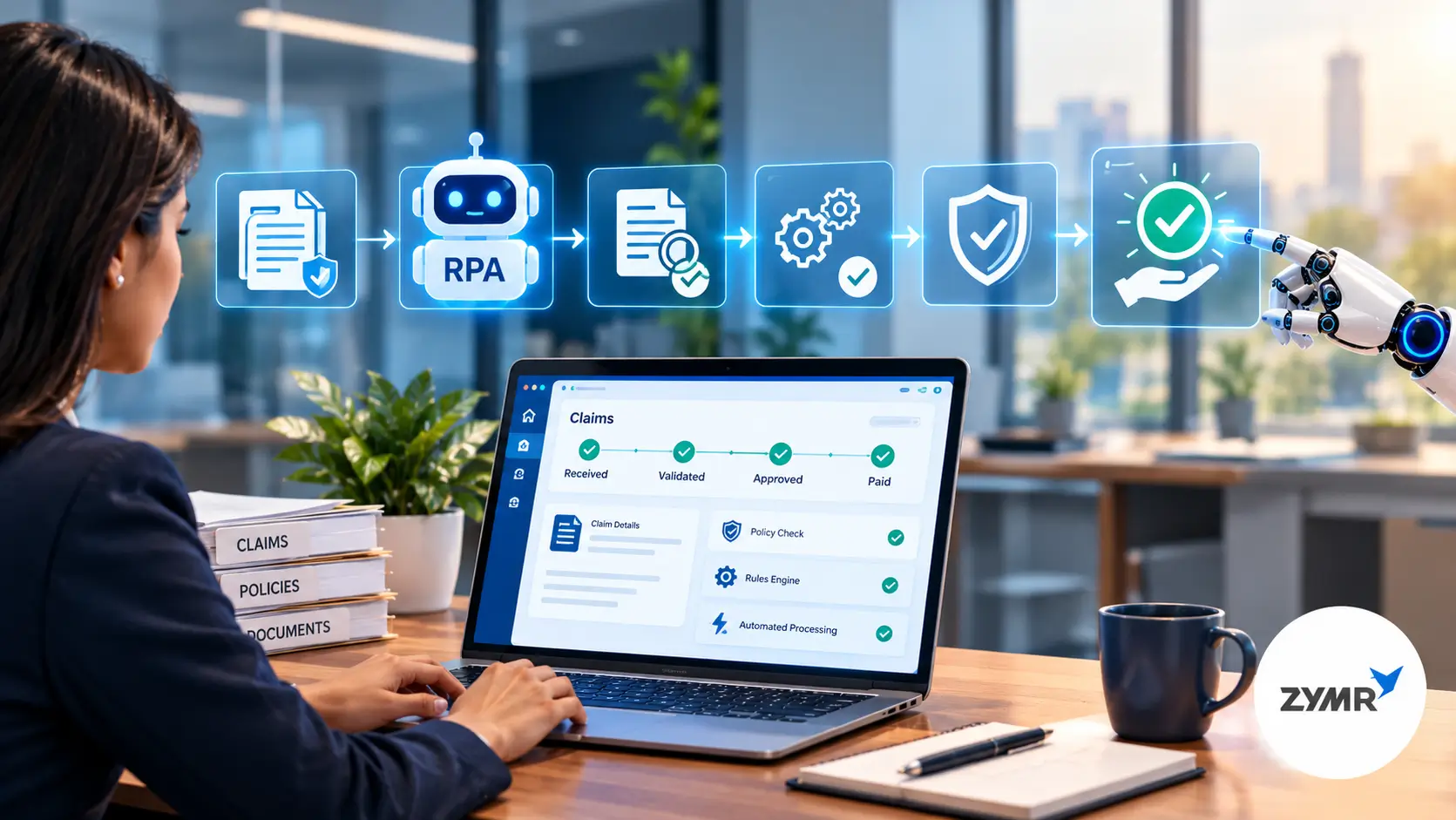
Insurance Workflow Automation: From RPA to Straight-Through Processing - The 2026 Maturity Model

September 16, 2026


.svg)
.svg)
.svg)
.svg)
.svg)
.svg)
