
Omnichannel vs Multichannel Banking: What’s the Difference?
This blog explains how multichannel and omnichannel banking differ in the way channels share identity, data, and customer context. It covers key features, technology, the transition roadmap, business impact, challenges, leading bank examples, and where both models are heading by 2030.
Play Voice
Nikunj Patel
Senior Director of Engineering
October 21, 2026
Key Takeaways
- Multichannel banking gives customers many ways to reach the bank, but each channel runs on its own systems, data, and workflows.
- Omnichannel banking connects those channels through shared customer identity, real-time data, and journey orchestration, so customers can continue a journey without restarting.
- Adding more channels does not make a bank omnichannel; unified identity, real-time data, and one operating model do.
- Moving from multichannel to omnichannel works best as a phased transformation that starts with priority journeys, connected data, and modern APIs.
- A connected omnichannel foundation is what lets AI deliver next-best actions, proactive service, and real-time fraud detection across channels.
Omnichannel vs multichannel banking describes two different approaches to managing customer interactions across banking channels. The distinction affects customer experience, data architecture, operating models, personalization, and service continuity.
Multichannel banking gives customers access through mobile apps, websites, branches, ATMs, and contact centers. However, each channel may operate through separate systems, customer records, and workflows.
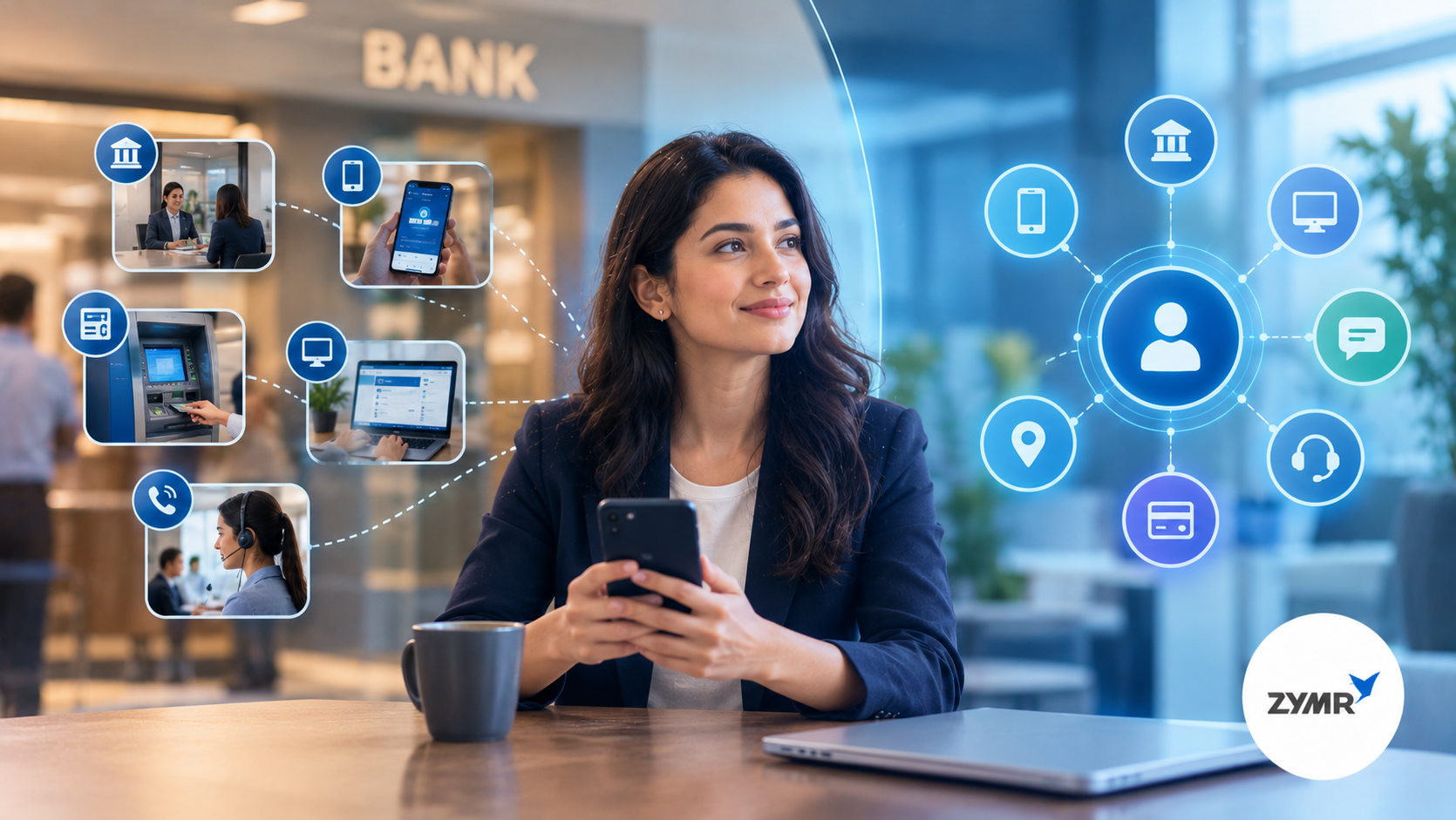
Omnichannel banking connects these channels through shared customer identity, real-time data, and journey orchestration. Customers can begin an interaction in one channel and continue it elsewhere without restarting.
The difference becomes important as the customer journey in banking grows more complex. Account opening, lending, payments, service requests, and wealth interactions now span multiple digital and physical touchpoints.
A strong omnichannel model requires more than consistent interface design. It depends on integrated customer data, APIs, identity management, event-driven systems, and modern core banking capabilities.
This guide explains the key differences, architecture, transformation roadmap, business benefits, implementation challenges, leading examples, and future direction of omnichannel banking in 2026.
Why the Difference Between Omnichannel and Multichannel Banking Matters
The difference between omnichannel and multichannel banking affects customer experience, operating efficiency, data quality, and revenue growth. It determines whether banking channels work independently or as one connected ecosystem.
i. Customer Experience
Multichannel banking gives customers access through several touchpoints. Omnichannel banking connects those touchpoints into one continuous customer journey.
ii. Data Continuity
Multichannel environments often maintain channel-specific customer data. Omnichannel models use unified identity and centralized data to preserve context across interactions.
iii. Operational Efficiency
Disconnected channels create duplicate processes, repeated verification, and handoff friction. Integrated journeys reduce unnecessary effort for both customers and service teams.
iv. Revenue Opportunity
Connected customer data enables stronger personalization, cross-sell, and next-best-action recommendations. It also supports more consistent offers across channels.
v. Strategic Flexibility
Omnichannel architecture creates a stronger foundation for AI, open banking, digital products, and real-time engagement.
For banks, the omnichannel vs multichannel question is not simply how many channels they offer. The real question is whether those channels share identity, data, context, and operating logic.
What Is Multichannel Banking?
Multichannel banking allows customers to access banking services through multiple independent channels. Common channels include mobile apps, websites, branches, ATMs, call centers, and chat support.
i. Channel Structure
Each channel typically operates through its own systems, workflows, and customer data. This creates flexibility for customers but often limits continuity between interactions.
ii. Customer Experience
Customers can choose their preferred banking channel for different tasks. However, moving between channels may require repeating information or restarting processes.
iii. Data Management
Multichannel environments often maintain channel-owned data and separate customer records. Batch synchronization may connect systems, but updates are not always available in real time.
iv. Operating Model
Different teams may own mobile, branch, contact center, and digital experiences independently. This structure can create inconsistent processes, interfaces, and service standards.
v. Example
A customer starts a loan application online but visits a branch for support. If the branch cannot access the digital application state, the customer must repeat information.
Multichannel banking improves access, but it does not guarantee a unified banking experience across channels.
What Is Omnichannel Banking?
Omnichannel banking connects multiple banking channels through shared data, identity, workflows, and customer context. The goal is to deliver one continuous experience across digital and physical touchpoints.
i. Channel Structure
Mobile apps, websites, branches, contact centers, and other channels operate through connected systems. Each channel accesses the same underlying customer context.
ii. Customer Experience
Customers can start an activity in one channel and continue it through another. The journey remains consistent without repeating information or restarting the process.
iii. Data Management
Omnichannel banking uses unified customer identity and centralized real-time data. This creates a consistent profile across interactions and service channels.
iv. Operating Model
Teams work across shared journeys instead of managing channels in isolation. This improves consistency in service, offers, compliance, and customer communication.
v. Example
A customer starts a mortgage application on mobile and later visits a branch. The branch advisor can view the same application state, documents, and previous interactions.
Omnichannel banking therefore focuses on connected journeys, not simply channel availability. It creates one consistent experience across every customer touchpoint.
Omnichannel vs. Multichannel Banking: Key Differences
The main difference is how channels share data, context, and customer journeys. Multichannel provides access across separate channels, while omnichannel connects them through one coordinated experience.
For banks, this distinction directly affects conversion, service efficiency, personalization, and customer retention. The shift to omnichannel therefore requires a new omnichannel banking architecture and operating model, not only additional digital channels.
Mapping where your channels still behave as multichannel? Explore Zymr’s fintech software development services for digital banking platforms.
Key Features of Multichannel and Omnichannel Banking
Multichannel and omnichannel banking both give customers several ways to reach the bank. The difference shows in how those channels are built, owned, and connected.
Omnichannel features create a unified banking experience rather than a collection of separate digital banking channels. They also provide the foundation for stronger personalization, service efficiency, and cross-channel conversion.
Why Many Banks Still Deliver Multichannel Experiences
Many banks offer several customer channels but still operate through fragmented technology and ownership models.
i. Multiple CRM Instances
Different business units may maintain separate customer records. This prevents teams from creating one reliable customer view.
ii. Inconsistent Customer Identity
Fragmented customer identity in banking means customers may have different identifiers across mobile, branch, lending, and service platforms.
iii. Batch Data Synchronization
Customer information may move between systems on scheduled intervals. This delays context sharing across channels.
iv. UX Inconsistency
Different teams may design channel experiences independently. This creates variations in workflows, navigation, and service expectations.
v. Channel-Based Operating Models
Teams often optimize their own channel performance instead of the complete customer journey.
vi. Legacy Core Constraints
Older core systems can limit real-time integration, API access, and workflow flexibility. Without application modernization or a middleware layer, these limits carry into every channel.
Example: A customer updates contact information through mobile banking, but a branch still sees the previous record.
Banks often describe this environment as omnichannel because multiple touchpoints exist. In practice, the experience remains multichannel until identity, data, journeys, and operating models become connected.
What Technology Powers Omnichannel Banking?
Omnichannel banking depends on a connected technology stack that unifies identity, data, journeys, APIs, core systems, experience layers, and analytics.
i. Customer Identity
CIAM platforms such as Microsoft Entra External ID manage customer identity in banking across mobile, web, branch, and service channels.
ii. Customer Data Platform
A CDP such as Twilio Segment combines behavioral, transactional, and profile data into a unified customer view.
iii. Journey Orchestration
Journey platforms coordinate next-best actions, messaging, service handoffs, and cross-channel engagement. Pega, for example, provides next-best-action decisioning through its Customer Decision Hub.
iv. API Gateway
APIs connect customer-facing channels with banking services, data sources, and external ecosystems. Payment integrations may also need to support ISO 20022, the international standard for financial messaging.
v. Core Banking and Middleware
Modern core platforms such as Thought Machine Vault and Temenos, or middleware layers over an existing core, expose banking capabilities through reusable services.
vi. Channel Experience Layer
Shared design systems improve consistency across apps, web interfaces, and assisted-service environments.
Analytics and AI
Analytics and AI use unified data to support personalization, fraud detection, and proactive service.
A successful omnichannel banking architecture connects these layers through real-time data and shared customer context.
How Banks Can Move From Multichannel to Omnichannel Banking
A sound omnichannel banking strategy moves through phased transformation rather than channel-by-channel redesign.
i. Assess Existing Banking Channels
Map each customer journey in banking, along with current systems, data sources, and handoff failures across every channel.
Example: Identify where mobile, branch, and contact-center journeys require customers to repeat information.
ii. Connect Customer Data and Systems
Create a unified customer identity and connect fragmented data across banking platforms.
Example: Link CRM, transaction, service, and digital interaction data into one customer profile.
iii. Integrate Digital and Branch Experiences
Ensure customers can continue the same journey across mobile, web, branch, and assisted channels.
Example: A customer starts account opening online and completes verification at a branch without restarting.
iv. Roll Out Improvements in Phases
Implement omnichannel capabilities gradually across priority journeys and customer segments, with fintech software testing validating each release before wider rollout.
This phased approach reduces transformation risk while improving customer continuity and business value over time.
Business Impact of Multichannel vs Omnichannel Banking
Multichannel and omnichannel banking create value in different ways. Multichannel banking widens access by giving customers more ways to reach the bank. Omnichannel banking adds value by connecting customer journeys, data, service operations, and product engagement, and gives cybersecurity and fraud teams a single view of customer activity.
For banks, multichannel delivers access, while omnichannel improves both customer experience and operating economics through one connected model.
Common Challenges in Multichannel and Omnichannel Banking
The challenges differ by model. Multichannel banks live with the day-to-day cost of disconnected channels. Banks moving to omnichannel face transformation challenges across architecture, data, customer experience, governance, and operating models, and multichannel habits can still break cross-channel banking along the way.
An omnichannel banking strategy succeeds when architecture, operating-model, and customer-journey changes progress together, and when data analytics measures the whole journey rather than individual channels.
Multichannel vs Omnichannel Banking Examples: Leading Banks to Learn From
The banks and fintechs below show where connected journeys replace typical multichannel patterns. These omnichannel banking examples show how connected journeys, unified data, and consistent customer experiences can work in practice.
Taken together, these omnichannel banking examples show that moving beyond multichannel improves both customer convenience and operating efficiency.
How AI, Data, and Personalization Work in Multichannel vs Omnichannel Banking
AI and personalization depend on the data they can reach. In multichannel banking, AI often works with the data of a single channel. In omnichannel banking, unified data makes AI more responsive, relevant, and context-aware.
Omnichannel banks can build these capabilities with AI models for next-best action, Generative AI for virtual assistants, and real-time fraud detection across cross-channel banking activity.
The Future of Multichannel and Omnichannel Banking
Multichannel banking will remain the baseline for access, while omnichannel banking moves beyond connected channels toward intelligent, predictive, and increasingly invisible customer experiences. As the shifts below take hold, the gap between the two models will matter more.
The future model will combine AI, unified identity, real-time data, and human expertise across one connected experience. As voice and embedded finance join existing digital banking channels and AI agents take on more customer journeys, banks that stay multichannel keep the access benefits, but not the continuity.
Next Steps
The omnichannel vs multichannel decision comes down to whether channels share identity, data, and context. Banks planning omnichannel banking in 2026 can start here:
- Assess current journeys: Identify where customers face friction across mobile, web, branch, and service channels.
- Unify customer identity: Create one consistent customer profile across products, systems, and touchpoints.
- Connect data in real time: Replace fragmented data flows with shared context and event-driven integration.
- Prioritize high-value journeys: Start with onboarding, lending, servicing, and other journeys tied to measurable business impact.
- Modernize supporting architecture: Strengthen APIs, data platforms, core integration, orchestration, and shared UX standards.
- Define cross-channel KPIs: Track completion rates, retention, customer satisfaction, onboarding speed, and cost-to-serve.
- Build an AI and personalization roadmap: Use unified data to support proactive service, recommendations, and intelligent assistance.
- Plan for continuous evolution: Keep refining journeys as customer expectations, regulations, and technology change.
Conclusion
FAQs
1. What Is the Difference Between Omnichannel and Multichannel Banking?
>
Multichannel banking gives customers access through several independent channels, each with its own systems and data. Omnichannel banking connects those channels through shared identity, real-time data, and journey orchestration, so customers can continue a journey across channels without restarting.
2. What Is Multichannel Banking?
>
Multichannel banking lets customers use mobile apps, websites, branches, ATMs, and contact centers, but each channel typically runs on separate systems, customer records, and workflows.
3. What Is Omnichannel Banking?
>
Omnichannel banking connects every channel through shared customer identity, data, and context, creating one continuous experience across digital and physical touchpoints.
4. How Long Does the Transition From Multichannel to Omnichannel Take?
>
Timelines depend on architecture complexity, data fragmentation, legacy systems, and priority journeys.
5. What Are the Business Benefits of Omnichannel Banking?
>
Key benefits include stronger retention, higher customer satisfaction, increased cross-sell, lower service costs, faster onboarding, and improved personalization.
Have a specific concern bothering you?
Try our complimentary 2-week POV engagement


Our Latest Blogs


October 14, 2026


