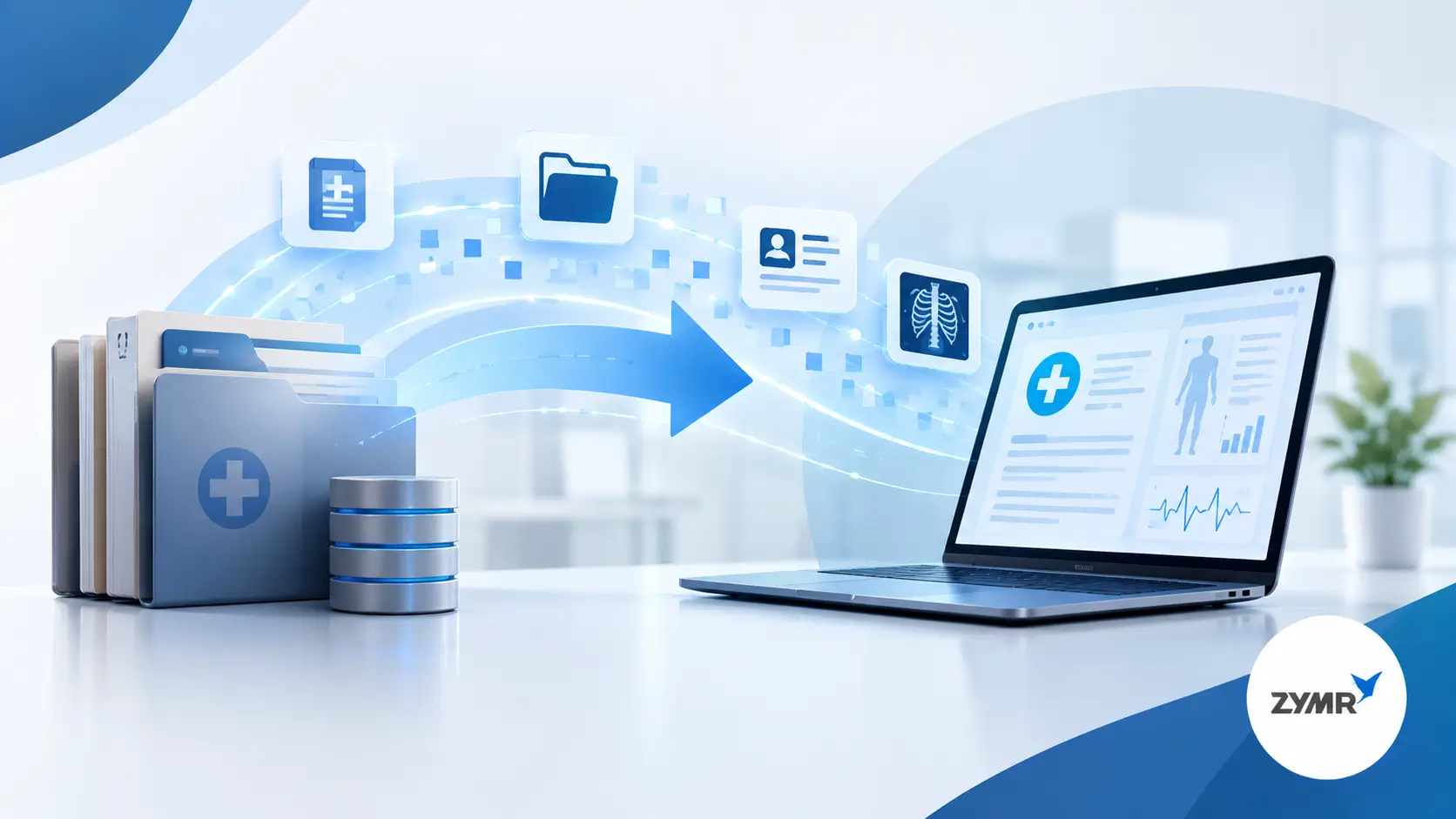
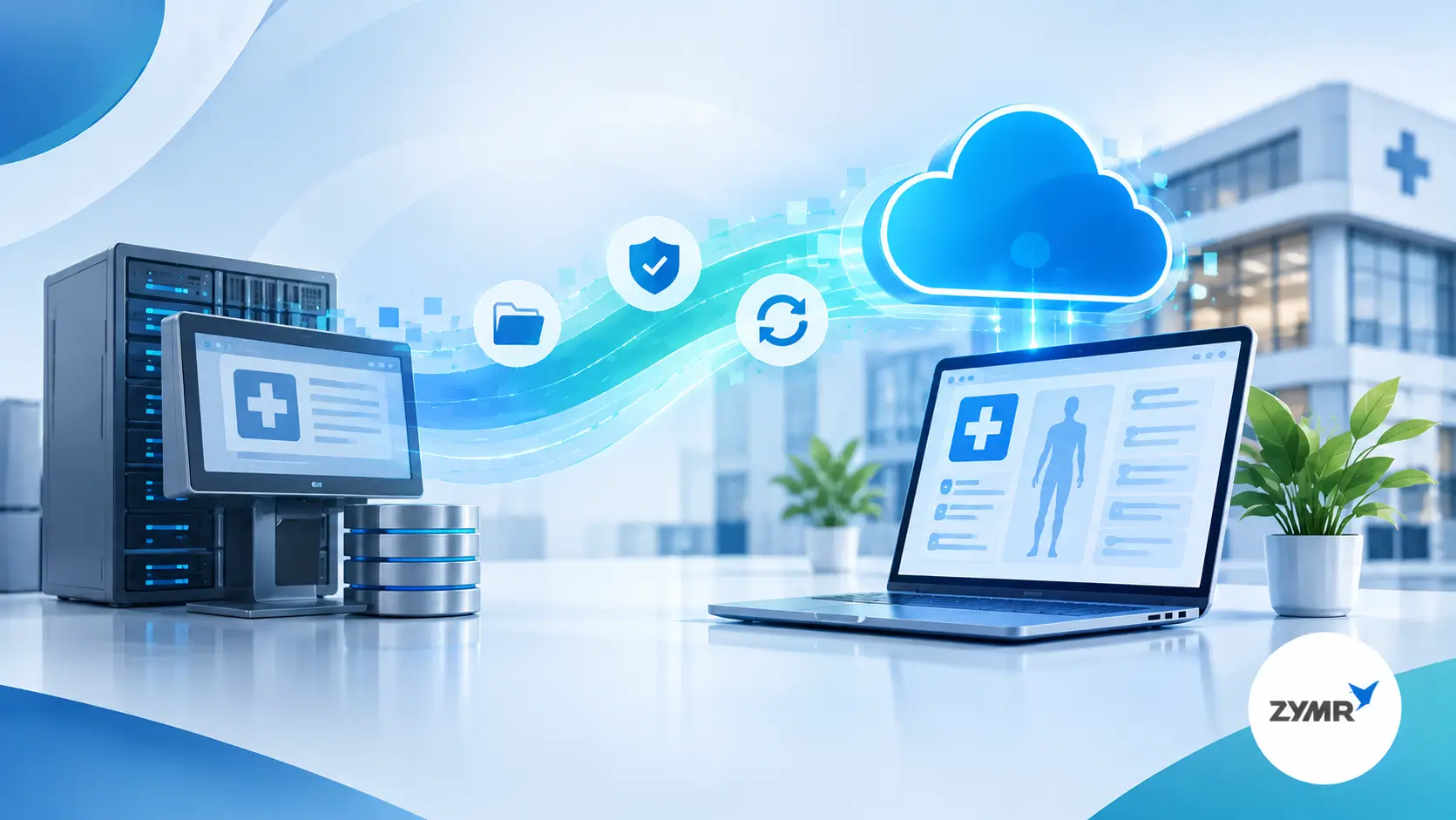
Healthcare IT & Cloud Modernization: Migrating Clinical Systems Without Disruption
This blog describes how healthcare organizations can modernize clinical systems and move them to the cloud without disrupting patient care. It covers the 2027 drivers, key migration risks, a six-pillar migration framework, zero-downtime patterns, workload suitability, and the KPIs that measure success.
Play Voice
Jay Kumbhani
VP of Engineering & General Manager
November 2, 2026
Key Takeaways
- Windows Server 2016 extended support ends in January 2027, and CMS-0057-F payer API requirements generally take effect on January 1, 2027, which makes 2027 a deadline year for clinical infrastructure.
- Clinical migrations carry higher stakes than standard IT projects because they involve 24/7 operations, patient safety, HIPAA obligations, deep system integrations, and strict data integrity requirements.
- A safe migration rests on six pillars: clinical safety governance, secure cloud architecture, data validation, interoperability, phased rollout with rollback, and clinician change management.
- Patterns such as Strangler Fig, parallel runs, blue-green and canary deployments, and Change Data Capture let teams validate new systems before full cutover instead of assuming downtime away.
- Not every workload belongs in the cloud, so a four-tier suitability framework should guide hosting decisions, and seven KPI categories should measure outcomes against a pre-migration baseline.
Healthcare IT modernization involves upgrading legacy clinical applications, infrastructure, and data architectures to improve operational efficiency and system resilience. It enables healthcare organizations to adopt scalable cloud environments while maintaining clinical data integrity and regulatory compliance.
Healthcare cloud modernization requires careful migration of electronic health records (EHRs), laboratory systems, and medical imaging platforms. Healthcare organizations must prioritize uninterrupted clinical workflows, secure data exchange, and reliable system availability throughout migration.
A structured approach combines phased deployment, interoperability planning, clinical validation, and disaster recovery capabilities. These measures help healthcare providers reduce operational risks, control infrastructure costs, and support long-term healthcare IT transformation.
Why Healthcare IT Modernization Matters in 2027
Healthcare organizations face growing pressure to replace aging infrastructure, strengthen cybersecurity, and meet evolving interoperability requirements. By 2027, several technology and regulatory developments will make hospital IT modernization increasingly important.
Six key factors are driving this urgency:
1. Legacy Infrastructure End-of-Support: Microsoft Windows Server 2016 reaches extended support expiration in January 2027, increasing upgrade urgency for affected systems.
2. Medical Device Compatibility: Aging medical devices require infrastructure upgrades, compatibility assessments, and validated integrations to maintain dependable clinical operations.
3. Rising Cybersecurity Threats: Ransomware incidents expose infrastructure weaknesses, making network segmentation, identity protection, and disaster recovery essential investments.
4. Evolving HIPAA Security Requirements: Proposed HIPAA Security Rule changes emphasize stronger cybersecurity safeguards, including encryption, multifactor authentication, and technology asset management.
5. CMS Interoperability Deadlines: CMS-0057-F establishes FHIR API requirements for impacted payers, with compliance dates generally beginning in January 2027.
6. AI Readiness and Workforce Efficiency: Modern data architectures support AI adoption, reduce manual workloads, and improve access to clinical information.
Together, these factors make modernization a strategic priority for healthcare leaders seeking operational continuity, compliance, and long-term scalability.
What Is Healthcare IT and Cloud Modernization?
Healthcare IT and cloud modernization involves upgrading legacy healthcare applications, infrastructure, and data systems using modern technologies. It improves system scalability, security, interoperability, and operational performance while maintaining clinical workflow continuity.
Healthcare modernization focuses on three core areas:
1. Application Modernization: Refactors or replaces legacy clinical applications to improve performance, maintainability, and integration with modern healthcare platforms.
2. Infrastructure Modernization: Transitions outdated servers and storage environments toward scalable cloud infrastructure or hybrid environments, improving resource utilization and system resilience.
3. Data and Integration Modernization: Upgrades healthcare data architectures and interfaces using standards such as HL7 FHIR (Fast Healthcare Interoperability Resources) for secure information exchange.
Healthcare cloud modernization supports these improvements through cloud-native architectures, automated deployments, centralized monitoring, and disaster recovery capabilities.
For healthcare organizations, modernization reduces technical debt, improves infrastructure flexibility, and enables faster deployment of digital health services. However, successful execution requires clinical safety validation, regulatory compliance, and carefully planned migration strategies.
How Is Clinical System Migration Different From Other IT Migrations?
Clinical systems migration involves transferring healthcare applications, patient data, and integrations between technology environments while maintaining clinical safety. Unlike conventional IT migrations, it directly affects patient care, medical decisions, and healthcare service availability.
Six factors distinguish clinical migrations from traditional IT migrations:
1. Continuous Clinical Operations: Hospitals operate 24/7, requiring migration strategies that minimize downtime across critical patient care systems.
2. Patient Safety Requirements: Migration errors can affect medication records, diagnostic results, and treatment decisions, creating direct clinical risks.
3. Regulatory Compliance: Healthcare migrations must protect patient information and maintain applicable HIPAA security, privacy, and audit requirements.
4. Clinician Workflow Continuity: Physicians and nurses require uninterrupted access to clinical applications, familiar workflows, and accurate patient information.
5. Complex System Integrations: Clinical environments connect EHRs, laboratory systems, imaging platforms, and medical devices through multiple interoperability interfaces.
6. Strict Data Integrity: Patient records require accurate transfer, reconciliation, and validation to prevent missing, duplicated, or corrupted information.
Business Impact: Effective clinical migration planning reduces operational disruption, protects patient safety, and preserves clinician productivity. It also enables healthcare organizations to modernize infrastructure without compromising essential care delivery.
What Are the Main Risks of Clinical System Migration?
Clinical systems migration introduces operational, security, and data integrity risks that can disrupt healthcare delivery. Healthcare organizations must assess these risks before migrating critical applications and patient information.
Seven major risks require careful mitigation:
1. Patient Safety Incidents: Incorrect medication records, missing clinical information, or system errors can compromise treatment decisions and patient outcomes.
2. Unplanned System Downtime: A failed EHR cloud migration can interrupt clinician access to patient records, diagnostic services, and essential clinical workflows across healthcare facilities.
3. Data Loss or Corruption: Incomplete transfers, mapping errors, and inconsistent records can compromise patient information accuracy and reliability.
4. Integration Failures: Broken interfaces between EHRs, laboratory systems, and medical devices can delay critical information exchange.
5. Regulatory Compliance Gaps: Inadequate access controls, encryption, or audit trails can expose organizations to HIPAA compliance risks.
6. Clinician Workflow Disruption: Unfamiliar interfaces and insufficient training can increase administrative workloads and reduce clinical productivity.
7. Budget and Timeline Overruns: Unexpected technical dependencies, integration complexity, and repeated validation cycles can increase migration expenses.
Business Impact: Proactive risk assessment, phased deployment, and validated rollback procedures help healthcare organizations protect clinical operations, control migration costs, and maintain service continuity.
The 6 Pillars of a Safe Healthcare Migration Strategy
A safe healthcare cloud migration strategy combines clinical governance, secure infrastructure, data validation, and controlled deployment processes. These six pillars help healthcare organizations minimize operational risks while maintaining patient safety and regulatory compliance.
Pillar 1 – Clinical Safety and Governance: Clinical safety governance establishes oversight mechanisms to identify, assess, and mitigate risks throughout the migration process.
Pillar 2 – Secure and Compliant Cloud Architecture: Secure cloud architecture integrates identity management, encryption, network segmentation, and disaster recovery to protect sensitive healthcare information.
Pillar 3 – Data Migration and Validation: Data migration and validation ensure patient records remain accurate, complete, and consistent across legacy and modernized systems.
Pillar 4 – System Integration and Interoperability: Interoperability planning maintains reliable information exchange between EHRs, laboratory platforms, imaging systems, and connected clinical applications.
Pillar 5 – Phased Migration and Rollback Planning: Phased migration enables controlled system transitions, while rollback procedures restore previous environments when critical failures occur.
Pillar 6 – Change Management and Clinician Training: Structured training and change management prepare clinical teams for new technologies without compromising established care workflows.
Business Impact: Together, these pillars reduce migration uncertainty, improve operational resilience, and support sustainable healthcare technology modernization.
Pillar 1: Clinical Safety and Governance
Clinical safety governance establishes structured oversight to identify, evaluate, and control patient safety risks during a hospital cloud migration. It ensures infrastructure changes do not compromise clinical decisions, patient records, or essential care delivery.
Six components strengthen clinical safety governance:
1. Clinical Safety Committee: Establish oversight involving Chief Medical Information Officers (CMIOs), Chief Nursing Information Officers (CNIOs), and technical leaders.
2. Risk Assessment: Apply Failure Mode and Effects Analysis (FMEA) to identify potential system failures and their clinical consequences.
3. Clinical Validation Protocols: Test medication workflows, diagnostic information, patient records, and critical application functions before migration approval.
4. Parallel System Operations: Run legacy and modernized environments simultaneously for a risk-appropriate validation period, potentially 30–90 days.
5. Incident Management and Rollback: Define escalation procedures, safety thresholds, and recovery mechanisms to address critical migration failures.
6. Post-Migration Safety Review: Monitor clinical incidents, system performance, and workflow reliability after deployment to identify emerging risks.
Business Impact: Strong governance reduces patient safety risks, strengthens clinical accountability, and prevents costly operational disruptions during modernization.
Pillar 2: Secure and Compliant Cloud Architecture
Secure cloud architecture establishes a protected, scalable infrastructure for hosting clinical applications and sensitive healthcare data. It combines cloud security controls, regulatory safeguards, and operational resilience to support reliable healthcare service delivery.
Seven essential components support secure healthcare cloud architecture:
1. Cloud Provider and Landing Zone: Establish secure environments on AWS, Azure, or Google Cloud with appropriate Business Associate Agreements (BAAs), a prerequisite for any HIPAA compliant cloud migration because the cloud provider creates, receives, maintains, or transmits ePHI on your behalf.
2. Healthcare Data Platforms: Deploy scalable data infrastructure supporting secure storage, processing, and accessibility of clinical information.
3. Integration Architecture: Implement HL7 FHIR APIs and integration engines to enable standardized communication between healthcare applications.
4. Identity and Access Security: Apply role-based access control (RBAC), multifactor authentication (MFA), and encryption to protect sensitive patient information.
5. DevOps and GitOps: Automate infrastructure provisioning, configuration management, and application deployments while maintaining consistent security policies.
6. Backup and Disaster Recovery: Establish recovery objectives, automated backups, and failover mechanisms to maintain clinical system availability.
7. Cloud Financial Operations (FinOps): Monitor resource consumption, optimize cloud spending, and maintain infrastructure cost visibility using practices published by the FinOps Foundation.
Business Impact: A well-architected cloud environment is the foundation of a HIPAA compliant cloud migration. It strengthens regulatory readiness, improves infrastructure resilience, and enables healthcare organizations to scale digital services efficiently.
Pillar 3: Data Migration and Validation
Data migration and validation ensure accurate, complete, and secure transfer of clinical information between legacy and modernized systems. The process maintains patient record integrity, prevents data inconsistencies, and supports uninterrupted clinical workflows.
Six key workstreams support reliable healthcare data migration:
1. Data Inventory and Classification: Identify clinical datasets, patient records, sensitive information, and dependencies before initiating migration.
2. Data Mapping and Transformation: Standardize data formats, resolve structural differences, and align legacy records with target system requirements.
3. Historical Data Migration: Transfer existing patient records, medical histories, and diagnostic information through controlled bulk migration processes.
4. Continuous Data Synchronization: Use Change Data Capture (CDC) tools such as Debezium to synchronize updated records between legacy and target environments.
5. Data Reconciliation and Validation: Verify record completeness, data accuracy, and consistency through automated comparisons and clinical validation checks.
6. Data Archiving Strategy: Retain historical records securely according to applicable retention requirements while reducing unnecessary migration complexity.
Business Impact: Structured data migration reduces information loss, improves clinical data reliability, and limits costly post-migration corrections. It also supports operational continuity and long-term data accessibility.
Pillar 4: System Integration and Interoperability
System integration and interoperability ensure seamless data exchange between clinical applications, medical devices, and healthcare platforms. A structured integration strategy maintains information accuracy, supports clinical workflows, and reduces dependencies on legacy interfaces.
Six key workstreams support effective healthcare interoperability:
1. Interface Inventory: Identify existing connections, data dependencies, integration protocols, and communication requirements across clinical systems.
2. HL7 to FHIR migration: Modernize legacy HL7 interfaces using Fast Healthcare Interoperability Resources (FHIR) APIs for standardized healthcare data exchange.
3. Integration Engine Modernization: Upgrade platforms such as Mirth Connect, Rhapsody, and Cloverleaf to improve interface management and scalability.
4. Event Streaming Infrastructure: Implement technologies such as Apache Kafka to support real-time clinical data distribution and event processing.
5. Parallel Interface Operations: Run existing and modernized integrations simultaneously to validate data consistency before completing system transitions.
6. Regulatory Interoperability Readiness: Align applicable integration capabilities with CMS-0057-F requirements, including FHIR-based data exchange for impacted payers.
Business Impact: Effective interoperability reduces integration failures, improves clinical information availability, and strengthens coordination across healthcare systems. It also supports future application upgrades without requiring extensive interface redevelopment.
Pillar 5: Phased Migration and Rollback Planning
Phased migration and rollback planning enable healthcare organizations to transition clinical systems through controlled deployment stages. This approach minimizes operational disruption, validates system performance, and enables recovery when critical migration failures occur.
Six key practices support safe clinical system transitions:
1. Migration Prioritization: Categorize clinical applications by criticality, dependencies, and operational risks to determine the appropriate migration sequence.
2. Pilot Deployment: Test modernized systems within limited clinical environments before expanding migration across healthcare facilities.
3. Phased System Cutover: Transition applications and workloads incrementally to maintain clinical service availability and reduce deployment risks.
4. Parallel Operations: Maintain legacy and modernized environments simultaneously to verify system functionality and clinical workflow continuity.
5. Rollback Planning: Define recovery procedures, rollback triggers, and restoration checkpoints to address critical failures during deployment.
6. Post-Cutover Monitoring: Track application availability, integration performance, and clinical workflow stability before retiring legacy infrastructure.
Business Impact: Phased migration reduces operational downtime, limits financial exposure, and protects essential clinical services. It also enables healthcare organizations to modernize infrastructure while maintaining predictable deployment timelines.
Pillar 6: Change Management and Clinician Training
Change management and clinician training prepare physicians, nurses, and support staff to adopt the systems introduced by a hospital cloud migration without disrupting patient care. A structured approach addresses workflow changes, improves user readiness, and minimizes operational resistance during migration.
Six key practices support successful clinical technology adoption:
1. Stakeholder Engagement: Involve physicians, nurses, IT teams, and clinical leaders in migration planning and decision-making.
2. Workflow Assessment: Evaluate existing clinical processes, identify operational dependencies, and align modernized applications with care delivery requirements.
3. Role-Based Training: Provide targeted training for physicians, nurses, administrators, and technical teams based on their responsibilities.
4. Clinical Champions: Engage experienced healthcare professionals to support system adoption, communicate changes, and address implementation concerns.
5. Go-Live Support: Establish dedicated technical assistance, issue escalation procedures, and on-site support during critical deployment stages.
6. Adoption Monitoring: Measure system utilization, clinician feedback, training effectiveness, and workflow performance to identify improvement opportunities.
Business Impact: Effective change management reduces productivity losses, improves clinician satisfaction, and accelerates technology adoption. It also helps healthcare organizations realize greater value from healthcare technology modernization investments.
How Can Healthcare Systems Be Migrated With Minimal Downtime?
Healthcare systems can achieve minimal-downtime migration through phased deployments, continuous data synchronization, and controlled traffic routing. These approaches support zero-downtime healthcare migration by maintaining clinical application availability while allowing organizations to validate modernized environments before full deployment.
Ten migration patterns support operational continuity:
1. Strangler Fig Pattern: Gradually replaces legacy application components while maintaining existing clinical functionality during modernization.
2. Event Interception: Captures and redirects system events toward modernized services without interrupting existing clinical workflows.
3. Branch by Abstraction: Introduces an abstraction layer to transition application functionality without directly disrupting dependent clinical services.
4. Parallel Run: Operates legacy and modernized systems simultaneously to validate functionality, data accuracy, and operational reliability.
5. Blue-Green Deployment: Maintains two production environments, enabling controlled traffic switching after validating the updated system.
6. Canary Deployment: Releases application changes to limited user groups before expanding deployment across healthcare facilities.
7. Feature Flags: Enables controlled activation or deactivation of application features without requiring complete system redeployment.
8. Shadow Traffic: Replicates production requests into modernized environments to assess system behavior without affecting clinical operations.
9. Change Data Capture (CDC): Continuously synchronizes database changes to maintain consistency between legacy and target systems.
10. Immutable Snapshots and Replay: Preserves consistent system states and supports recovery or controlled event replay during migration.
Business Impact: These patterns minimize downtime risks, protect clinical workflows, and reduce disruption-related costs. Actual availability depends on system dependencies, architecture, and clinical validation requirements.
Which Clinical Systems Are Suitable for Cloud Migration?
Clinical system cloud suitability depends on application criticality, latency requirements, regulatory obligations, and integration complexity. Healthcare organizations should classify workloads before migration to balance operational efficiency, patient safety, and infrastructure costs. For example, an EHR cloud migration usually depends on what the EHR vendor supports, whether that is vendor-hosted deployment, a cloud edition, or a hybrid model that keeps some components on-premises.
A four-tier framework helps determine migration priorities:
Business Impact: Workload-based migration prioritization prevents unnecessary infrastructure investments, reduces clinical disruption, and improves resource allocation. It helps healthcare organizations adopt cloud capabilities without compromising critical system performance.
What Are the Common Healthcare IT Modernization Challenges?
Healthcare IT modernization involves technical, operational, and organizational challenges that can affect migration costs and clinical continuity. Addressing these challenges early helps healthcare organizations avoid implementation delays and protect hospital IT modernization investments.
Ten common challenges require strategic planning:
1. Big-Bang Migration: Migrating entire clinical systems in a single cutover increases downtime risks, limits recovery flexibility, and removes the incremental validation that zero-downtime healthcare migration depends on.
2. Weak Clinical Governance: Inadequate clinical oversight can expose patient safety risks and delay critical decisions.
3. Insufficient Change Management: Limited training and stakeholder involvement can reduce clinician adoption and disrupt workflows.
4. Legacy Interface Dependencies: Outdated point-to-point HL7 v2 integrations complicate data exchange, and an unplanned HL7 to FHIR migration can increase application modernization costs.
5. Data Migration Complexity: Inconsistent records, incompatible formats, and incomplete validation can compromise clinical data accuracy.
6. Lift-and-Shift Limitations: Moving applications without architectural improvements can preserve technical debt and operational inefficiencies.
7. Inadequate Rollback Planning: Missing recovery procedures can extend outages and increase migration-related financial losses.
8. Limited Clinical Leadership: Insufficient CMIO involvement can weaken coordination between technical teams and healthcare professionals.
9. Excessive Vendor Dependence: Vendor-specific architectures can restrict integration flexibility and increase long-term switching costs.
10. Prolonged Pilot Programs: Repeated testing without defined deployment milestones can delay modernization benefits and increase spending.
Business Impact: Addressing these challenges improves migration predictability, controls implementation costs, and strengthens operational resilience.
How to Measure Healthcare Migration Success
Healthcare cloud migration success is measured through clinical safety, system availability, data integrity, and operational performance indicators. Tracking these metrics helps healthcare organizations validate migration outcomes and assess long-term business value.
Seven key performance indicator (KPI) categories measure migration effectiveness:
Healthcare organizations should establish baseline measurements before migration and monitor performance after deployment.
Business Impact: Consistent KPI tracking demonstrates modernization value, identifies operational gaps, and supports data-driven infrastructure investment decisions.
Next Steps
Healthcare organizations should adopt a structured modernization roadmap that prioritizes clinical safety, operational continuity, and measurable business outcomes. A phased approach helps reduce migration risks while ensuring infrastructure investments support a broader healthcare IT transformation rather than a one-time infrastructure project.
Five strategic next steps include:
1. Assess Existing Infrastructure: Evaluate legacy applications, clinical dependencies, security vulnerabilities, and infrastructure limitations to identify modernization priorities.
2. Define Migration Objectives: Establish measurable goals for system availability, cost optimization, interoperability, and regulatory compliance.
3. Develop a Phased Migration Roadmap: Prioritize workloads based on clinical criticality, technical complexity, and potential business impact.
4. Validate Security and Clinical Readiness: Conduct integration testing, data reconciliation, clinical safety assessments, and disaster recovery simulations before deployment.
5. Monitor and Optimize Performance: Track migration KPIs, clinician adoption, infrastructure spending, and system reliability to improve modernization outcomes.
A successful healthcare IT modernization strategy requires coordination between clinical leaders, technology teams, and implementation partners. Zymr supports healthcare organizations through application modernization, cloud engineering, data integration, and secure migration architecture.
Conclusion
FAQs
1. Which clinical systems should be migrated to the cloud?
>
Patient portals, healthcare analytics platforms, and administrative applications are generally suitable for cloud migration. Critical systems, including EHRs, laboratory platforms, and imaging applications, require phased migration and clinical validation.
2. What are the zero-downtime migration patterns for clinical systems?
>
Common patterns include blue-green deployments, canary releases, parallel operations, and Change Data Capture (CDC). These approaches minimize service interruptions through controlled deployment, continuous synchronization, and rollback capabilities.
3. How do you ensure HIPAA and HITRUST compliance during cloud migration?
>
Organizations should implement encryption, access controls, audit logging, and documented security risk assessments. HIPAA compliance requires applicable regulatory safeguards, while HITRUST provides an assessable security control framework.
4. How long does a clinical system cloud migration typically take?
>
Migration timelines depend on application complexity, data volumes, integration dependencies, and clinical validation requirements. Smaller workloads may take weeks or months, while enterprise-wide clinical migrations can require multiple years.
5. How can healthcare organizations minimize risks during cloud migration?
>
Organizations should prioritize clinical safety assessments, phased deployments, data validation, and tested disaster recovery procedures. Continuous monitoring and clinician involvement further reduce operational disruptions and migration-related risks.
Have a specific concern bothering you?
Try our complimentary 2-week POV engagement


Our Latest Blogs
November 2, 2026
Healthcare IT & Cloud Modernization: Migrating Clinical Systems Without Disruption