
Free GCC Assessment with Experts

Cloud-Based Clinical Decision Support Platform Development
Healthcare organizations increasingly need clinical decision support systems that scale beyond a single hospital, EHR deployment, or geographic region. Zymr engineers cloud-native CDS platforms built for multi-tenant SaaS delivery, AI-as-a-service inference, FHIR-native interoperability, and CDS Hooks-based EHR integration. From healthtech startups launching subscription-based CDS products to enterprise health systems modernizing legacy clinical intelligence infrastructure, we build cloud-based clinical decision support platforms that combine multi-cloud deployment flexibility, real-time clinical intelligence, and HIPAA, HITRUST, FedRAMP, and FDA-ready architecture from day one.


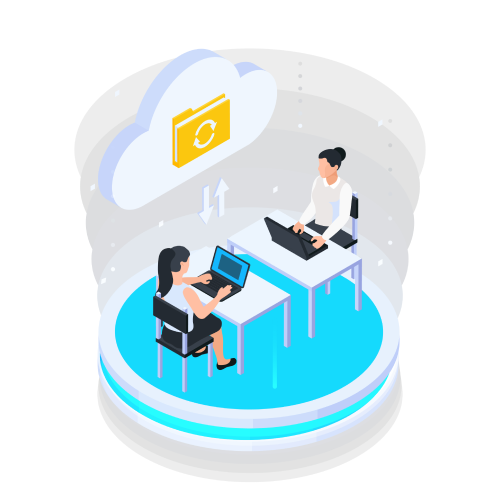
Traditional clinical decision support systems were designed for individual deployments inside hospital environments. They required extensive infrastructure management, complex upgrade cycles, and costly integration projects every time a new site was onboarded. That model is becoming increasingly difficult to sustain.
Cloud-native CDS platforms fundamentally change how clinical intelligence is delivered. Instead of deploying decision support separately at every facility, organizations can provide clinical guidance as a scalable service through APIs, CDS Hooks, SMART on FHIR applications, and AI-powered inference engines that operate across entire healthcare networks.
As part of our broader Clinical Decision Support Services capabilities, Zymr engineers cloud-based CDS platforms that health systems subscribe to and digital health companies commercialize. We combine multi-tenant architecture, FHIR-native integration, cloud-scale AI inference, and healthcare-grade compliance into a single operational platform designed for long-term scalability.
40+
healthcare cloud platforms
99.99%
uptime SLA
Multi-cloud AWS,
Azure & GCP expertise
100%
HIPAA and HITRUST-aligned architecture
Why Cloud-Based CDS Platforms?
Clinical decision support has traditionally been constrained by deployment complexity. Every new hospital implementation required infrastructure provisioning, local customization, integration testing, upgrade planning, and ongoing operational support. Scaling became expensive long before clinical value could fully expand.
Cloud-based CDS platforms solve this problem by shifting decision support into a centralized service model. New hospitals, clinics, provider groups, and digital health applications can consume clinical intelligence through standardized APIs rather than deploying entirely separate decision-support environments.
This model also creates significant advantages for AI-powered clinical workflows. Predictive models, deterioration scoring engines, sepsis detection systems, drug interaction services, and diagnostic support algorithms can scale dynamically without maintaining dedicated infrastructure for every customer.
The market is moving rapidly in this direction. Healthcare organizations increasingly want cloud-native CDS capabilities that support multi-site deployments, continuous updates, AI-driven recommendations, and interoperability with any compliant EHR ecosystem.

Cloud CDS Development Needs
Cloud CDS Platform Strategy & Architecture
Multi-Tenant SaaS CDS Engineering
AI-as-a-Service CDS Model Layer
CDS Hooks Cloud API & FHIR Integration
Multi-Cloud Deployment & DevOps
Cloud CDS Security, Compliance & Certification
Cloud CDS Platform Engineering Capabilities
Multi-Tenant SaaS Architecture Layer

CDS Microservices & API Layer
AI-as-a-Service Inference Layer
FHIR-Native Cloud Integration Layer
Cloud Infrastructure & DevOps Layer
Security, Compliance & Governance Layer
Cloud-Based Clinical Decision Support Platform Development
Community Health Network - Cloud-Based Early Warning & Sepsis Detection Platform
A 4,500-bed healthcare network needed a cloud-hosted clinical intelligence platform capable of analyzing patient telemetry across multiple facilities in real time. Zymr engineered a cloud-native early warning system that combined AI-powered sepsis detection, scalable inference infrastructure, and real-time clinical alerting workflows. The platform helped identify sepsis risk up to 19 hours earlier and contributed to a 29% reduction in mortality, demonstrating the impact of cloud-scale clinical AI and continuous decision support.
Project Details →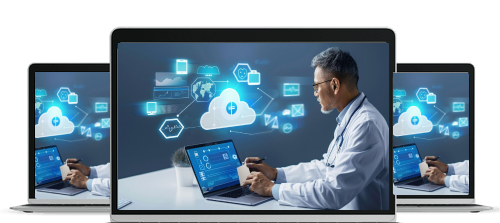
Mozzaz - Multi-Tenant Digital Health SaaS Platform
Mozzaz required a healthcare SaaS platform capable of supporting multiple customer environments while maintaining HIPAA compliance, EHR interoperability, and advanced analytics capabilities. Zymr engineered a cloud-native multi-tenant architecture with secure tenant isolation, healthcare data integration, AI/ML analytics, and scalable platform operations. The solution enabled Mozzaz to deliver healthcare services through a single cloud platform while supporting diverse customer requirements.
Project Details →
Cequence - AI-Native Cloud Platform Engineering on GCP
Cequence needed a cloud-native platform capable of supporting large-scale AI workloads, real-time analytics, and multi-tenant SaaS operations. Zymr designed a GCP-based architecture leveraging BigQuery Lakehouse, automated ML pipelines, scalable model-serving infrastructure, and cloud-native orchestration frameworks. The platform illustrates how modern cloud architectures can operationalize AI services through scalable, auto-scaling SaaS environments.
Project Details →
Why Zymr
Multi-Tenant Cloud-Native CDS Architecture
AI-as-a-Service Clinical Intelligence
FHIR-Native CDS Hooks Cloud APIs
Multi-Cloud Portability
GCC Cloud CDS Engineering Squads
Who We Build Cloud CDS Platforms For
HealthTech SaaS Companies Building CDS Products
HealthTech companies increasingly deliver clinical intelligence as subscription-based software rather than site-specific deployments. We help product teams build scalable cloud-native CDS platforms with multi-tenancy, interoperability, AI services, and commercial SaaS operating models built directly into the architecture.
Hospitals & Health Systems Migrating CDS to Cloud
Many provider organizations operate legacy CDS environments that are difficult to scale, update, and govern. We help health systems modernize decision-support infrastructure through cloud-native architecture, centralized rule management, AI-enabled clinical intelligence, and standards-based interoperability.
Medical Device Companies Building SaMD Platforms
Connected medical devices increasingly rely on cloud-hosted decision-support capabilities to deliver clinical value. We engineer FDA-aware cloud architectures supporting Software as a Medical Device workflows, predictive analytics, interoperability, and regulated clinical operations.
Precision Medicine & Genomics Platforms
Precision medicine environments often depend on complex clinical reasoning, guideline execution, genomic interpretation, and AI-driven recommendation engines. We build cloud-native CDS platforms capable of supporting these computationally intensive workflows at scale.
Clinical Research Organizations (CROs)
Research organizations increasingly require cloud-hosted clinical intelligence systems capable of protocol guidance, patient stratification, cohort analysis, and real-time recommendation delivery. We engineer CDS platforms that support research operations while maintaining compliance and data-governance requirements.
Health Insurance Payers
Payers increasingly use decision support to improve care quality, identify intervention opportunities, support utilization management, and enable value-based care programs. We build cloud CDS platforms that combine predictive analytics, clinical guidance, and population-level intelligence.
Pharmacy Benefit Managers (PBMs)
Medication management continues to be one of the largest CDS use cases in healthcare. We engineer cloud-based drug-interaction services, formulary intelligence platforms, medication optimization engines, and clinical recommendation systems that support pharmacy operations at scale.
Solutions We Deliver
Greenfield Cloud CDS SaaS Platform Build
On-Premise CDS to Cloud Migration
Multi-Cloud CDS Platform Engineering
CDS Hooks Cloud Service Development
AI-as-a-Service CDS Platform
FHIR-Native Cloud CDS Hub
Technology Stack
Cloud
AWS (HealthLake, SageMaker, EKS, RDS), Azure (API for FHIR, Azure ML, AKS), GCP (Healthcare API, Vertex AI, GKE, BigQuery)
Container & Orchestration
Kubernetes, Docker, Helm, ArgoCD
Infrastructure as Code
Terraform, Pulumi, CloudFormation
Healthcare Standards
FHIR R4, CDS Hooks, SMART on FHIR, Arden Syntax, HL7 v2
AI & Machine Learning
Representative Technologies: CycloneDX, SPDX, Dependency-TraNVIDIA Triton, TorchServe, TensorFlow, PyTorch, BioClinicalBERT, clinical NLP pipelinesck, Trivy, Grype, Syft
Databases
PostgreSQL, MongoDB, Redis, Cosmos DB, DynamoDB
APIs & Integration
REST, GraphQL, Kong, Apigee, AWS API Gateway
Monitoring & Observability
Datadog, Prometheus, Grafana, Arize AI, distributed tracing and clinical operations dashboards
Security
Vault, AWS KMS, Azure Key Vault, IAM, WAF, certificate-management infrastructure
Frequently Asked Questions
What is a cloud-based clinical decision support platform?
A cloud-based clinical decision support platform delivers clinical intelligence through cloud-hosted services rather than site-specific deployments. These platforms provide recommendations, alerts, guideline execution, predictive analytics, and decision support through APIs, EHR integrations, and cloud-native applications accessible across multiple healthcare organizations.
How do you ensure HIPAA compliance for cloud-based CDS?
HIPAA-compliant cloud CDS platforms require secure infrastructure, encryption, access governance, audit logging, identity controls, monitoring, data-protection workflows, and operational safeguards designed specifically for PHI handling across cloud environments.
Can a cloud CDS platform qualify as FDA SaMD?
Yes. Depending on the clinical functionality, recommendation behavior, and intended use, a cloud-based CDS platform may qualify as Software as a Medical Device and become subject to additional FDA regulatory requirements.
Which cloud provider is best for clinical decision support: AWS, Azure, or GCP?
Each cloud provider offers unique strengths. AWS provides mature healthcare and AI services, Azure integrates naturally with Microsoft-centric healthcare ecosystems, and GCP offers strong healthcare analytics and AI capabilities. The right choice depends on interoperability requirements, governance needs, AI workloads, and long-term platform strategy.
How do you migrate an on-premise CDS system to the cloud?
Successful migration typically involves architecture assessment, interoperability modernization, rules-engine transformation, cloud infrastructure design, security hardening, deployment automation, validation testing, and phased operational transition to minimize clinical disruption.
Can cloud CDS platforms support real-time clinical alerts?
Yes. Modern cloud-native CDS platforms support real-time alerts through CDS Hooks, event-driven architectures, FHIR subscriptions, streaming data pipelines, AI-powered inference services, and workflow-aware clinical integration patterns.
What is the difference between cloud-hosted and cloud-native CDS?
Cloud-hosted CDS typically involves moving an existing application into cloud infrastructure without fundamentally changing the architecture. Cloud-native CDS is designed specifically for cloud environments using microservices, auto-scaling, multi-tenancy, API-first design, and cloud-native operational patterns that support greater scalability and flexibility.
What is CDS Hooks and how does it enable cloud CDS integration?
CDS Hooks is a healthcare interoperability standard that allows EHR systems to call external clinical decision support services during workflow events such as viewing a patient record or placing an order. This makes cloud-hosted CDS platforms significantly easier to integrate across multiple EHR environments.
How do you handle multi-tenancy in a healthcare SaaS CDS platform?
Multi-tenancy is typically achieved through tenant-aware architecture patterns such as database-per-tenant, schema-per-tenant, or row-level isolation combined with access controls, auditability, configuration management, and governance frameworks designed for healthcare environments.
What is AI-as-a-Service in the context of CDS?
AI-as-a-Service refers to delivering predictive models and clinical intelligence through independently deployable cloud services. Instead of embedding models directly into applications, healthcare organizations consume AI capabilities such as sepsis prediction or deterioration scoring through scalable APIs.
What security certifications should a cloud CDS platform have?
Common requirements include HIPAA alignment, HITRUST readiness, SOC 2 Type II controls, FDA compliance where applicable, and FedRAMP authorization for government healthcare environments. The exact requirements depend on customer profile, deployment model, and regulatory scope.
How does Zymr price cloud CDS platform development?
Pricing depends on platform scope, AI requirements, interoperability complexity, compliance needs, deployment model, multi-tenancy requirements, and engagement structure. Some organizations require focused modernization initiatives while others need dedicated long-term engineering teams supporting full SaaS platform development.
Ready to build a cloud CDS platform that any EHR can call and any health system can subscribe to?
Connect with Zymr’s healthcare cloud architects for a technical deep dive into your cloud CDS architecture, interoperability strategy, AI roadmap, compliance requirements, and SaaS platform vision.

.svg)
.svg)
.svg)
.svg)
.svg)
.svg)