Strategy and Solutions


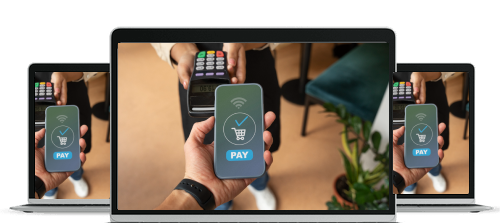
The client was a mid-sized e-commerce retailer specializing in lifestyle, apparel, and home products. With nearly 2 million monthly visits and a rapidly growing mobile audience, the company had reached a critical inflection point: their products were popular, marketing spend was high, but checkout conversions remained stagnant. Their payments infrastructure relied on a single legacy payment gateway that frequently timed out, especially during sales events. Mobile checkout failures were particularly severe, and the company noticed rising reports of declined transactions even when customers’ cards were valid.
As the business expanded across different regions, the limitations of a single payment provider became more visible. Conversion dropped significantly for international customers due to unavailable payment options. The leadership team realized the existing setup was costing them revenue and loyalty. They needed a modern, multi-gateway payment integration, optimized user experience, and stronger reliability-without disrupting day-to-day operations.

The retailer’s payment ecosystem had several deep-rooted issues that made scaling difficult.
Legacy Single-Gateway Dependency
All transactions flowed through one outdated gateway. Outages, timeouts, and slow response times often translated into failed payments. Even during normal load, the gateway had a 15–18% failure rate, well above industry norms.
High Mobile Checkout Failures
Nearly 70% of their traffic was mobile, yet the mobile checkout module didn’t support popular wallets like Apple Pay, Google Pay, Paytm, or local bank apps, causing younger and international customers to abandon purchases.
Lack of Alternative Payment Methods
The platform did not support UPI (for India), Klarna, AfterPay, PayPal Express, or BNPL options—methods increasingly preferred by global shoppers.
Inconsistent Transaction Routing
There was no intelligent routing. If the gateway had downtime, the transaction simply failed. The business lacked fallback logic to retry transactions on alternate gateways.
Security Compliance Pressure
The rapid growth meant the company needed stronger compliance alignment with PCI DSS, tokenization, and secure customer data handling. Their existing system stored partial card details in ways that increased risk and required rework.
This engagement transformed the retailer’s checkout ecosystem into a high-performance, globally scalable, conversion-driving engine. The modernized payment infrastructure empowered the business to compete head-to-head with larger players while offering an enterprise-grade customer experience.
Zymr’s solution delivered:
Within months of deployment, the client experienced measurable—and transformative—results across conversion, performance, and revenue.
Mobile Conversions Increased by 42%
The introduction of Apple Pay, Google Pay, and one-tap checkout directly boosted purchases from younger and mobile-first segments.
Global Sales Lift
Localized payment options contributed to higher acceptance in international markets, especially APAC and Europe.
Zero Payment Outages
Smart routing ensured uninterrupted processing even when a gateway experienced downtime.
Lower Customer Support Volume
Support requests related to failed payments dropped by 70%, freeing agents to handle higher-value interactions.
Enhanced Fraud Protection
Fraudulent transaction attempts decreased due to improved machine-learning-based risk assessment and tokenized customer data handling.
Better Insights Through Analytics
Zymr built dashboards showing gateway performance, authorization trends, and payment behavior—equipping business teams with rich insights.
Future-Ready Architecture
Adding new gateways now requires only configuration changes rather than engineering rewrites, accelerating future expansion initiatives.
Zymr designed and implemented a comprehensive payment modernization program combining payment gateway integration, reliability engineering, UX improvements, and compliance strengthening.
Multi-Gateway Integration Architecture
Zymr introduced an orchestrated multi-gateway environment using a modular microservices layer deployed on AWS.
Key elements included:
Each payment provider was wrapped in a uniform abstraction layer to simplify switching, reduce vendor lock-in, and allow rapid onboarding of new options.
Smart Transaction Routing Engine
We built a routing engine that evaluated:
Based on these factors, the system routed payments to the best-performing provider. During outages, the workflow automatically failed over to secondary gateways-preventing user-visible disruption.
Mobile-First Checkout Optimization
Zymr redesigned the mobile checkout to support single-tap payments, auto-filled card details, tokenized wallets, and a simplified UX that reduced steps from five to two.
We also delivered:
Localized & Alternative Payment Methods
To support global customers, Zymr added:
This allowed the business to unlock previously unreachable international segments.
Security & Compliance Alignment
To ensure long-term operational safety, Zymr implemented:





.svg)
.svg)
.svg)
.svg)
.svg)
.svg)