
Free GCC Assessment with Experts

MLOps Consulting Services
Most organizations do not fail at AI because they lack models. They fail because they lack operational ML systems capable of scaling those models reliably into production. Zymr delivers enterprise-grade MLOps Consulting Services that go beyond generic audits and tooling recommendations. We help enterprises assess ML maturity, design production-ready MLOps architecture, define LLMOps and GenAIOps strategy, optimize AI infrastructure costs, and establish industry-specific governance frameworks, with a seamless transition into implementation through our MLOps Engineering Services teams.


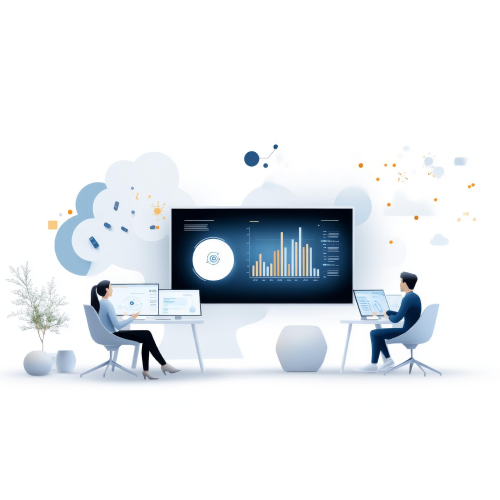
Nearly 87% of machine learning models never make it into production successfully. The problem is rarely model quality alone. Organizations struggle with fragmented data pipelines, inconsistent deployment workflows, weak governance, poor monitoring visibility, rising GPU costs, and increasing operational complexity introduced by GenAI systems.
Most companies do not need another generic MLOps framework presentation. They need consulting that understands their actual environment, cloud constraints, regulatory exposure, team maturity, operational scale, and long-term AI roadmap.
Zymr’s MLOps consulting combines structured maturity assessment, platform architecture strategy, AI governance planning, LLMOps advisory, and execution continuity under one roof. Unlike firms that stop at recommendations, our consulting engagements are designed to transition directly into scalable engineering implementation through dedicated MLOps delivery teams.
75+
MLOps consulting engagements
40+
production ML ecosystems assessed
100+
Level 0 to Level 2 maturity acceleration in 90 days
Consulting+
Engineering under one roof
Why MLOps Consulting?
Most enterprises already have data scientists building models. What they lack is operational machine learning infrastructure capable of supporting those models reliably at scale.
Models are trained manually. Deployments happen inconsistently. Monitoring is limited or nonexistent. Retraining workflows remain reactive. Governance becomes fragmented across teams. Then GenAI introduces entirely new operational layers, prompt management, embeddings, vector databases, RAG orchestration, hallucination monitoring, LLM evaluation, and GPU cost management.
The wrong MLOps platform decisions become extremely expensive to reverse later. Tooling sprawl, cloud lock-in, fragmented observability, and poorly governed AI workflows create long-term operational debt that slows AI adoption rather than accelerating it.
MLOps consulting provides the strategic foundation before those problems become deeply embedded into the enterprise AI stack. It allows organizations to assess maturity honestly, prioritize operational gaps, align AI architecture with business outcomes, and establish scalable ML delivery models before committing to infrastructure and tooling decisions prematurely.

Consulting Capabilities
MLOps Maturity Assessment

Platform Strategy & Architecture Design
Platform Strategy & Architecture Design
LLMOps & GenAIOps Engineering
ML Governance & Compliance Consulting
AI FinOps Consulting
Team & Process Consulting
MLOps Consulting Engagements
MLOps Maturity Assessment & Audit
MLOps Platform Strategy & Architecture Design
Tool Selection & Vendor Evaluation
LLMOps & GenAIOps Strategy
ML Governance & Compliance Consulting
AI FinOps Strategy
MLOps Consulting Services
AI-Native Cybersecurity Platform on GCP
A cybersecurity company needed to operationalize large-scale ML detection pipelines across high-volume telemetry environments. Zymr provided MLOps consulting and engineering support covering BigQuery-based lakehouse architecture, automated retraining workflows, production model serving, and scalable ML orchestration on GCP. Explore additional enterprise AI case studies across production ML engineering and cloud-native AI systems.
Project Details →
ZOEY-Agentic AI Orchestration Platform
Zymr designed and operationalized ZOEY AI orchestration infrastructure to support enterprise-scale agentic AI environments with LLM orchestration, RAG integration, multi-agent coordination, observability, and cloud-native orchestration workflows. The platform demonstrates how structured LLMOps strategy translates into scalable production-grade GenAI systems.
Project Details →
Healthcare Revenue Cycle AI Platform
A mid-sized health plan needed governed ML infrastructure capable of supporting revenue-cycle prediction workflows across 4.1 million claims. Zymr engineered a HIPAA-aware production ML environment with automated pipelines, governance controls, explainability workflows, and monitoring infrastructure that helped achieve 91% prediction accuracy and recover over $24 million operationally.
Project Details →
Industries We Consult For
Healthcare & Life Sciences
Healthcare AI systems require governance models aligned with HIPAA, FDA expectations, explainability requirements, and patient-safety considerations. We help healthcare organizations operationalize compliant ML environments capable of supporting production clinical AI responsibly.
Financial Services & Fintech
Financial AI systems increasingly operate under strict governance expectations around fairness, explainability, auditability, and model-risk management. We design production ML operating models aligned with regulated fintech and enterprise banking environments.
Cybersecurity
Cybersecurity AI systems degrade continuously as attacker behavior changes. We help security organizations operationalize detection-model governance, retraining orchestration, ATT&CK-aligned evaluation workflows, and observability environments for adaptive AI-driven security operations.
Retail & E-Commerce
Retail AI environments require continuous forecasting, recommendation optimization, pricing intelligence, and operational ML scalability under high-volume transactional workloads. We help retail organizations operationalize ML pipelines capable of supporting real-time decision-making at scale.
SaaS & AI-First Companies
AI-first companies often scale experimentation faster than operational governance. We help SaaS organizations design scalable ML infrastructure, GenAI orchestration models, observability systems, and AI platform architecture capable of supporting rapid product growth sustainably.
Manufacturing & IoT
Industrial AI systems introduce operational challenges around edge inference, telemetry orchestration, predictive maintenance, and hybrid-cloud ML deployment. We help manufacturing organizations operationalize AI environments across connected industrial ecosystems.
Insurance
Insurance AI environments depend heavily on governed risk modeling, fraud analytics, claims intelligence, and explainability architecture. We design operational ML governance models aligned with enterprise insurance workflows and regulatory expectations.
Media & Entertainment
Media AI systems increasingly depend on recommendation engines, personalization pipelines, content intelligence, and GenAI workflows operating continuously at scale. We help media organizations operationalize production AI systems without compromising delivery velocity.
Why Zymr for MLOps Consulting
LLMOps & GenAIOps Consulting
Industry-Specific ML Governance
AI FinOps as a Core Consulting Discipline
Structured Maturity Assessment & 90-Day Roadmap
Consulting + Engineering Continuity Through GCC
Consulting Deliverables
MLOps Maturity Assessment Report
Comprehensive operational assessment covering infrastructure maturity, deployment workflows, governance posture, observability gaps, retraining readiness, and organizational scalability constraints.
90-Day Prioritized Implementation Roadmap
Structured implementation roadmap aligned with operational maturity, engineering capacity, business priorities, and platform modernization sequencing.
MLOps Platform Architecture Blueprint
Production-grade architecture documentation covering orchestration layers, feature stores, serving infrastructure, monitoring systems, governance controls, and deployment workflows.
Tool Selection Matrix & Vendor Evaluation
Comparative operational analysis across MLOps tooling ecosystems including Kubeflow, SageMaker, Vertex AI, MLflow, Databricks, and enterprise orchestration platforms.
ML Governance & Compliance Framework
Structured governance documentation covering explainability, lineage, fairness monitoring, auditability, model-risk management, and regulated AI operational controls.
AI FinOps Optimization Strategy
Operational framework covering GPU utilization, workload orchestration, cost attribution, inference optimization, infrastructure governance, and AI cost-management workflows.
LLMOps Strategy Document
Enterprise GenAI operating model documentation covering RAG architecture, prompt governance, evaluation methodology, orchestration workflows, vector strategy, and hallucination mitigation controls.
Team Structure & Process Recommendations
Organizational advisory covering ML operating structures, delivery workflows, governance ownership, platform accountability, and long-term AI scalability planning.
Tech Stack & Tools We Advise On
Pipeline Orchestration
Modern ML systems depend heavily on reliable orchestration layers capable of managing experimentation, retraining, deployment, and monitoring workflows continuously. We advise on Kubeflow, Airflow, Prefect, Dagster, and Metaflow ecosystems based on operational complexity, AI scale, cloud alignment, and governance requirements.
Experiment Tracking & Model Lifecycle Management
Experimentation becomes operational chaos quickly without structured lineage and tracking systems. We help enterprises evaluate MLflow, Weights & Biases, Neptune, and Comet for experiment management, reproducibility, governance visibility, and collaborative ML operations.
Feature Store Strategy
Feature inconsistency between training and inference environments remains one of the largest hidden causes of ML instability. We advise on feature-store architecture using Feast, Tecton, and Databricks Feature Store environments designed for reusable, governed, production-grade feature engineering.
Model Serving & Inference Infrastructure
Inference infrastructure decisions shape scalability, latency, GPU utilization, and operational reliability. We help organizations evaluate NVIDIA Triton, TorchServe, KServe, Ray Serve, vLLM, and Hugging Face TGI environments based on workload characteristics and deployment strategy.
Cloud-Native MLOps Platforms
Different cloud ecosystems introduce very different operational tradeoffs for AI environments. We advise on SageMaker, Vertex AI, Azure ML, Databricks, and hybrid-cloud orchestration models based on governance requirements, GPU availability, data residency, and enterprise architecture constraints.This often aligns closely with broader cloud engineering initiatives and production AI infrastructure modernization efforts.
LLMOps & RAG Infrastructure
Enterprise GenAI systems require orchestration layers beyond traditional ML tooling. We advise on LangChain, LlamaIndex, Pinecone, Weaviate, pgvector, vector orchestration patterns, retrieval optimization, and enterprise-grade RAG architecture aligned with scalable GenAI operations.
Monitoring & ML Observability
Production AI systems require continuous operational visibility across drift detection, inference quality, fairness behavior, and model degradation. We advise on Arize AI, WhyLabs, Fiddler, Evidently, and custom observability architectures designed for governed ML environments.
Infrastructure-as-Code & Platform Automation
Production-grade MLOps environments increasingly depend on repeatable infrastructure provisioning and governed deployment automation. We help enterprises operationalize Kubernetes, Terraform, Helm, GitOps workflows, and infrastructure automation aligned with scalable AI platform operations.
FAQs
What are MLOps consulting services?
MLOps consulting services help organizations design, operationalize, govern, and scale machine learning systems across the full ML lifecycle including pipelines, deployment, monitoring, retraining, observability, governance, and production AI infrastructure.
What is the difference between MLOps consulting and MLOps engineering?
MLOps consulting focuses on strategy, assessment, architecture design, governance planning, tooling evaluation, and operational roadmap development. MLOps engineering services focus on implementation, building pipelines, deployment systems, observability infrastructure, serving environments, and production ML platforms.
How do I choose between SageMaker, Vertex AI, and Azure ML?
The right platform depends on cloud alignment, governance requirements, workload type, operational maturity, data residency constraints, GPU strategy, and long-term AI operating model. There is rarely a universally correct answer. Effective platform selection requires evaluating operational tradeoffs rather than feature lists alone.
How do you ensure HIPAA compliance in ML pipelines?
HIPAA-aware ML environments require governed data access, encryption controls, lineage tracking, auditability, secure model training workflows, inference governance, explainability visibility, and operational safeguards designed specifically for protected healthcare information handling.
How long does an MLOps maturity assessment take?
Most structured MLOps assessments take between two and six weeks depending on infrastructure complexity, organizational scale, cloud footprint, governance requirements, and the number of ML workflows being evaluated.
Can you both consult and build the MLOps platform?
Yes. Zymr combines consulting and implementation through integrated delivery teams spanning architecture advisory, platform engineering, ML infrastructure, observability, governance, and production deployment workflows.
What is an MLOps maturity assessment?
DevOps focuses on software delivery, while MLOps extends those principles to machine learning systems. MLOps has to manage data, features, model drift, retraining, and lifecycle monitoring in addition to code and infrastructure.
What is LLMOps and do I need separate consulting for GenAI?
LLMOps extends traditional MLOps practices into large language model operations including prompt governance, RAG orchestration, vector databases, hallucination mitigation, inference optimization, and LLM evaluation workflows. Most enterprises adopting GenAI benefit from dedicated LLMOps consulting because the operational requirements differ significantly from traditional ML systems.
What is AI FinOps and why does it matter?
AI FinOps focuses on managing and optimizing AI infrastructure costs across GPU usage, training workloads, inference scaling, storage consumption, and multi-cloud orchestration. As GenAI adoption expands, unmanaged AI infrastructure costs can scale extremely quickly without proper operational governance.
What is model governance and why does it matter?
Model governance ensures AI systems remain explainable, auditable, fair, observable, and operationally accountable throughout their lifecycle. This becomes especially important in regulated industries where AI decisions directly influence healthcare outcomes, financial approvals, fraud detection, or cybersecurity operations.
What deliverables do I get from MLOps consulting?
Typical deliverables include maturity assessment reports, architecture blueprints, governance frameworks, implementation roadmaps, AI FinOps strategies, LLMOps guidance, tooling evaluations, and organizational operating-model recommendations.
How does Zymr price MLOps consulting services?
Pricing depends on assessment scope, platform complexity, governance requirements, cloud footprint, GenAI involvement, organizational scale, and engagement model. Some enterprises require focused maturity audits while others need long-term strategic and implementation partnerships across evolving AI ecosystems.
Ready to go from ML chaos to production confidence?
Connect with Zymr’s MLOps architects for a free maturity assessment covering your ML infrastructure, governance posture, GenAI readiness, and operational scalability roadmap.

.svg)
.svg)
.svg)
.svg)
.svg)
.svg)